Elementor
Table of Contents
- Introduction — Why This Matters
- Background / Context
- Key Specs & Terms Explained
- Comparison Table (Tax Scenarios Side-by-Side)
- Individual Breakdown (What Changed, Item by Item)
- Why This Matters (Buyer Decision Factors)
- What to Expect Next (Category Trends)
- Common Misconceptions
- Recent Developments (Last 6-12 Months)
- Real Buyer Scenarios
- Buying Tips for This Price Range
- Conclusion and Final Verdict
- FAQs
- Where to Verify Prices & Specs
- Discussion
Introduction — Why This Matters
If you’ve bought a phone from abroad, had one shipped by a relative, or even just tried to figure out why your new iPhone got blocked on Jazz or Zong after two months, you’ve run into PTA tax — and 2026 has been a confusing year to try to understand it. Between a rate-cut proposal that didn’t pass, a valuation ruling that quietly lowered some taxes anyway, and a new installment option in the Finance Bill, it’s genuinely hard to tell what’s real and what’s social media noise.
We researched official FBR and PTA announcements, current news coverage of the 2026-27 budget process, and how the DIRBS registration system actually works today to build this guide.
Pakistan’s mobile tax structure has been one of the highest hidden costs of owning an imported or high-end phone for years, often adding tens of thousands of rupees to a device’s real price. 2026 didn’t bring the sweeping cut many people hoped for, but it did bring real, practical changes — some of which can save you a meaningful amount of money if you know how to use them.
This guide walks through exactly what changed, what stayed the same despite rumors, how CNIC and Passport registration compare now, and what to expect when you register a phone in the second half of 2026.
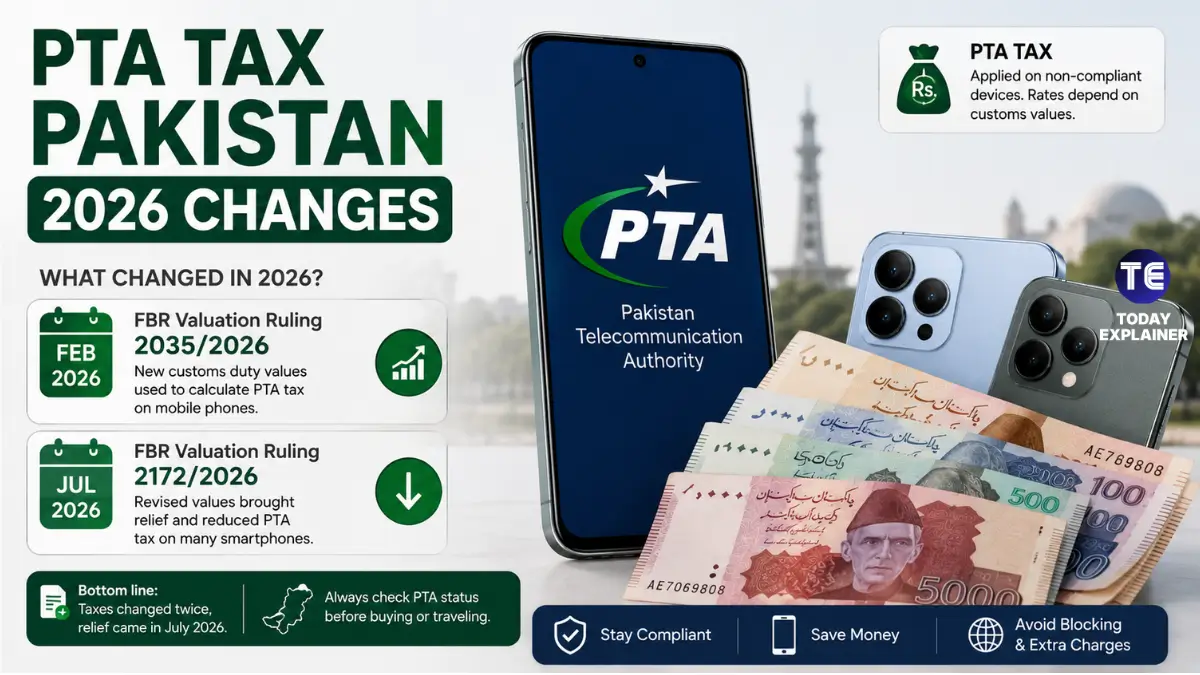
Quick Answer: The headline 25% tax rate on phones above $500 was not cut in the 2026-27 budget despite a proposal to lower it to 18%. What did change: a January 2026 FBR valuation ruling lowered the taxable value of 62 popular used/refurbished models (mostly iPhone 11-15, Samsung S20-S23, Pixel 6-8, and OnePlus 9-12) by 32-89%, cutting real-world tax by roughly 15-30% on those specific devices — and the Finance Bill 2026-27 introduced an installment option so you no longer have to pay the full amount upfront.

Background / Context
PTA tax exists because of Pakistan’s DIRBS (Device Identification, Registration and Blocking System) framework, which requires every phone brought into the country — new or used, gifted or purchased — to be registered before it can use a local SIM card for the long term. The tax itself is really a combination of customs duty, regulatory duty, sales tax, and (for non-filers) withholding tax, all calculated off the device’s assessed customs value in US dollars and converted to PKR at the exchange rate on your payment date.
Two things made 2026 a notable year for this topic. First, the FBR revised its official valuation tables in January, which directly affects how much tax older and mid-range imported phones attract. Second, the 2026-27 federal budget process reopened the long-running debate about whether the headline rate on premium phones should come down from 25% — a debate that ended, for now, without a rate cut. On top of that, a Finance Bill provision let taxpayers spread out payment instead of demanding it all at once, which matters more than it sounds like for anyone trying to register a PKR 150,000+ device.
Key Specs & Terms Explained
| Term | Simple Definition | Why It Matters for Buyers |
|---|---|---|
| DIRBS | The PTA’s Device Identification, Registration and Blocking System — the database that decides whether your phone’s IMEI can connect to local networks | If your phone isn’t in DIRBS as “compliant,” it gets blocked after the grace period |
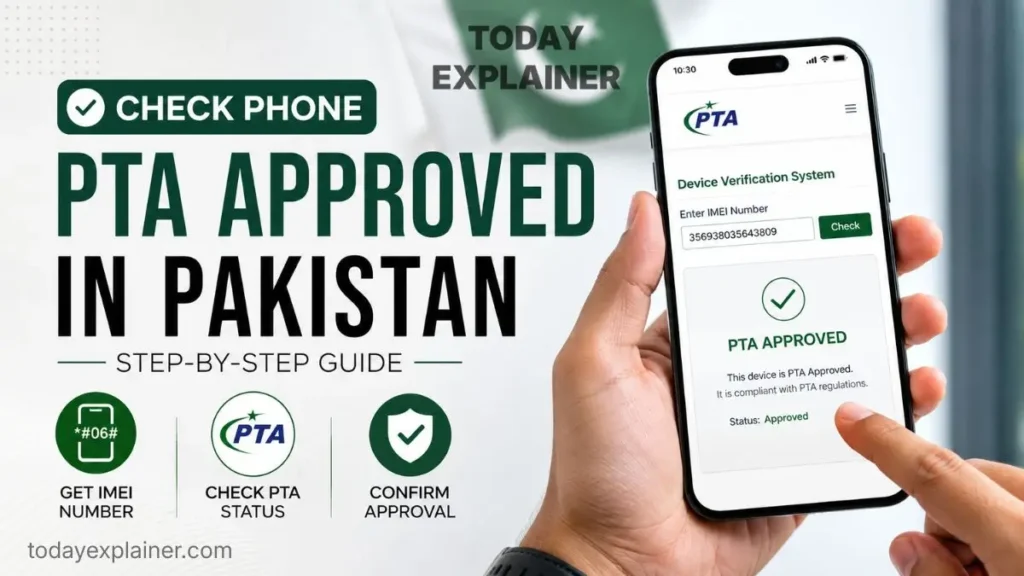
| IMEI | A unique 15-digit serial number for every mobile device, found by dialing *#06# | You need it to check registration status or generate a tax payment slip |
| CIF Value | Cost + Insurance + Freight — the customs-assessed value of your phone in USD | Your tax bill is calculated as a percentage of this, not the local retail price |
| CNIC Registration | Registering a phone using your national ID card | Standard route for residents; generally the more expensive of the two options |
| Passport Registration | Registering a phone using your passport, typically tied to a recent international arrival.l | Usually 15-25% cheaper than CNIC on the same device, but requires eligible travel history |
| PSID | Payment Slip ID generated by DIRBS once you request registration | This is the actual invoice you pay through a bank or mobile wallet |
| FBR Valuation Ruling | An official FBR notification that sets or updates the assessed customs value of specific phone models | A lower valuation ruling directly lowers your tax bill even if the tax rate doesn’t change |
| Withholding Tax | An additional tax applied to non-filers (people not on the Active Taxpayers List) | Filers consistently pay less than non-filers on the same device |
Comparison Table (Tax Scenarios Side-by-Side)
Because this isn’t a phone roundup, here’s the comparison that actually matters: how the numbers differ by registration route and device value band, based on the structure officials described during 2026 budget hearings and the FBR’s updated valuation approach.

| Scenario | Registration Route | Approx. Tax Load | Notes |
|---|---|---|---|
| Phone valued $201-$350 | CNIC | Fixed duty near PKR 14,661 + 17% sales tax | Mid-range imported Android phones commonly land here |
| Phone valued above $500 | CNIC | Duty exceeding PKR 37,000 + sales tax, often totaling around 25% of value | Most flagship iPhones and Samsung Ultra/Fold models |
| Phone valued above $500 | Passport (eligible traveler) | Typically 15-25% less than the CNIC figure above | Requires recent verified international arrival |
| Used/refurbished model on the FBR’s Jan 2026 list (e.g., iPhone 11-15, Galaxy S20-S23) | Either | 15-30% lower than pre-2026 tax on the same model | Lower customs value, not a lower rate |
| iPhone 16/17 series or other 2025-26 flagships not on the reduced list | Either | Unchanged, still among the highest tax brackets | New-generation flagships were not covered by the January ruling |
Every figure above is a working estimate based on publicly reported policy structure, not a fixed rate you can rely on for payment. Exact tax is generated live by DIRBS at the time you register, using that day’s exchange rate and the specific model/variant. Always confirm the final number on the official DIRBS portal before paying.
Individual Breakdown (What Changed, Item by Item)
FBR Valuation Ruling 2035/2026 — Lower Tax on Older Used Phones
- What changed: Effective January 16, 2026, the FBR revised the assessed customs values for 62 widely used phone models, cutting those values by roughly 32-89%.
- Models covered: Reports point to iPhone 11 through 15 series, Samsung Galaxy S20-S23, Google Pixel 6-8, and OnePlus 9-12 — largely older or previous-generation used and refurbished devices.
- What stands out: Because tax is calculated as a percentage of assessed value, a lower valuation directly lowers your bill without needing a rate cut, and multiple sources describe real-world savings in the 15-30% range on affected models.
- Where it falls short: The newest flagships — iPhone 17 series and equivalents — were explicitly not part of this reduction, so buyers of the very latest phones saw no relief here.
- Best for: Anyone importing or receiving a used iPhone or Samsung from a slightly older generation.
The 25% → 18% Rate Cut Proposal — Did Not Pass.
- What changed: A proposal circulated ahead of the 2026-27 budget to lower the headline tax rate on phones above $500 from 25% to 18%.
- What stands out: This was the change most people were actually hoping for, since it would have applied broadly rather than to a specific model list.
- Where it falls short: Reporting closer to the budget’s finalization indicated this reduction was unlikely to be approved this cycle, and the 25% rate on premium devices held.
- Best for: Nobody, in this case — this is the change that didn’t happen, and it’s worth knowing that clearly so you don’t budget around a discount that isn’t coming.
Finance Bill 2026-27 — Installment Payment Option
- What changed: For the first time, PTA tax on imported phones can be paid in monthly installments through the registration system, as long as the full amount clears within the same financial year.
- What stands out: This doesn’t reduce what you owe, but it removes the “pay six figures upfront,t or your phone stays unregistered” barrier that made registration genuinely inaccessible for a lot of people with expensive imported phones.
- Where it falls short: It’s payment flexibility, not a discount — the total tax owed is the same either way, and specifics of how installments interact with exchange-rate changes over the payment period weren’t fully detailed in early coverage.
- Best for: Anyone registering a high-value imported flagship who doesn’t want to pay the entire duty in one transaction.
The “PTA Tax Abolished” Rumor — False
- What changed: Nothing, officially — but social media claims that PTA-related duties had been scrapped entirely spread widely in mid-2026 after a lawmaker’s comment about regulatory duty was taken out of context.
- What stands out: Officials and fact-checks clarified there was no decision to abolish PTA taxes or duties; what was actually under discussion was a narrower adjustment plus the installment framework described above.
- Best for: Anyone who saw the viral claim — worth knowing before you skip registering a phone expecting the tax to have disappeared.
Why This Matters (Buyer Decision Factors)
Registration route changes your bill more than almost anything else. If you have a recent, eligible international arrival, Passport registration is consistently the cheaper path — often by tens of thousands of rupees on flagship devices. CNIC registration is the default for residents without that travel history, and it costs more for the same phone.
Model generation matters as much as brand. Because the January 2026 valuation cut only applies to a specific list of older/used models, two visually similar phones — say, an iPhone 15 and an iPhone 17 — can now sit in noticeably different tax brackets even though they used to be closer together.

Filer status is a real lever. Being on the FBR’s Active Taxpayers List avoids the withholding tax add-on that non-filers pay on top of the base duty. If you’re planning to register a phone soon, checking (or fixing) your filer status beforehand is one of the few things actually within your control.
Timing against the exchange rate matters. Since tax is calculated in USD-equivalent terms and converted at the live rate, the same phone can cost a different amount in rupees week to week. There’s no way to “beat” this reliably, but it’s worth knowing before you’re surprised at the register.
Buying Tip: Before you commit to buying an imported or used flagship, run your exact model and IMEI-equivalent details through the official DIRBS system (or a reputable calculator that clearly states its FBR ruling reference) rather than trusting a remembered number from a friend or a months-old article — 2026 has already shown how fast the underlying figures can shift.

What to Expect Next (Category Trends)
- Further budget-cycle debate is likely. The 18% rate proposal was shelved, not killed — expect it to resurface in future budget discussions, especially given continued public pressure and overseas Pakistani advocacy.
- More valuation rulings for newer models are plausible. If the pattern from January 2026 holds, the FBR may eventually extend reduced valuations to more recent phone generations as they age out of “current flagship” status.
- Installment mechanics will likely get clearer guidance. As the 2026-27 financial year progresses, expect PTA/FBR to publish more specific rules on how the installment option interacts with DIRBS deadlines and exchange-rate timing.
Common Misconceptions
Myth: PTA tax has been abolished in 2026. Reality: No official decision has removed PTA-related duties; a lawmaker’s comment about regulatory duty was widely misreported, and the underlying tax structure remains in place.
Myth: The tax rate dropped from 25% to 18% this year. Reality: That proposal was considered during the 2026-27 budget process but was not approved; the 25% rate on phones above $500 held.
Myth: Grey-market (non-PTA) phones are just as safe to use as registered ones. Reality: An unregistered phone will be blocked from local cellular networks after the grace period — Wi-Fi keeps working, but calls, SMS, and mobile data on Pakistani SIMs stop entirely until tax is paid.

Myth: CNIC and Passport registration cost the same. Reality: Passport registration for eligible travelers is typically 15-25% cheaper than CNIC registration on the identical device.
Myth: All iPhones got cheaper to register in 2026. Reality: Only specific older/used models (roughly iPhone 11-15) were covered by the January valuation cut — the newest flagship series was not included.
Myth: You can register a phone using someone else’s CNIC or passport with no consequence. Reality: PTA can revoke a registration if identity details don’t match ownership records, and using borrowed or mismatched documentation risks fines and device blocking.
Myth: The installment option means you pay less overall. Reality: It changes when you pay, not how much — the total tax owed is unchanged; it simply doesn’t have to be paid in one lump sum, as long as it clears within the financial year.
Recent Developments (Last 6-12 Months)
- January 16, 2026 — FBR Valuation Ruling 2035/2026 takes effect, cutting assessed customs values for 62 used/refurbished phone models by 32-89%.
- April 2026 — Officials tell a National Assembly finance committee that imported phones face duty around 54% of value combined across components, versus roughly 25% for locally assembled devices, and call for clearer long-term tax policy.
- May 2026 — Reporting indicates the proposed cut from 25% to 18% on premium phones is unlikely to be approved in the upcoming budget.
- June 2026 — A viral claim that PTA taxes were “abolished” is publicly clarified as false by fact-checkers and officials, tied to a misunderstood comment about regulatory duty.
- June 2026 — The Finance Bill 2026-27 formally introduces an installment mechanism for PTA tax on imported phones, payable within the same financial year.
- Through mid-2026 — Multiple independent trackers continue reporting the January valuation cut as the main concrete tax-reduction event of the year, with no broader rate change confirmed since.
Real Buyer Scenarios
The returning overseas Pakistani. Bilal is flying back from the UK with an iPhone 15 Pro he’s used for a year. Because his arrival is recent and documented, Passport registration is his cheaper option, and the January 2026 valuation cut on iPhone 15 models means his actual duty is noticeably lower than what a friend paid for the same model in 2025.
The local buyer is upgrading via import. Ayesha, based in Lahore, wants to buy a used Samsung Galaxy S22 from an online seller who imported it. She’s a CNIC-only registrant with no recent travel, so she pays the higher CNIC rate — but she still benefits from the lower January 2026 valuation on the S20-S23 range, and being a tax filer saves her the withholding-tax add-on non-filers pay.

The flagship-chaser. Hamza wants the newest iPhone 17 Pro Max shipped from a relative in the US. Because that model wasn’t part of the January valuation reduction, he’s paying close to the full pre-2026 duty structure — his main relief is the new installment option, which lets him spread the payment across a few months instead of paying it all at registration.
Buying Tips for This Price Range
- Check the exact model year before assuming a discount applies. The 2026 valuation cut is model-specific, not brand-wide — confirm your exact model is on the reduced list before budgeting around lower tax.
- Use Passport registration if you’re eligible. If you or the person bringing the phone has a recent, verifiable international arrival, this route is consistently cheaper.
- Confirm your filer status on the FBR’s Active Taxpayers List before registering, since non-filers pay additional withholding tax.
- Register within 60 days of first SIM use to avoid your device being blocked from Jazz, Zong, Telenor, or Ufone networks.
- Get the exact figure from DIRBS, not a third-party calculator, before paying. Several online calculators cite different figures for the same model because they’re built on different valuation-ruling snapshots.
- If paying a large tax bill, ask about the installment option introduced in the Finance Bill 2026-27 rather than assuming full upfront payment is your only route.
- Keep your original purchase invoice if buying used — it can support a valuation challenge if you believe FBR assessed the device too high.
Conclusion and Final Verdict
Best for buyers of slightly older used flagships: the January 2026 valuation ruling is the single biggest real win this year — genuine 15-30% savings on a defined list of models.
Best for anyone with recent overseas travel: Passport registration, which remains meaningfully cheaper than CNIC across the board.
Best for high-value imports needing cash-flow relief: the new installment option from the Finance Bill 2026-27.
Worst outcome to plan around: expecting the broader 25%-to-18% rate cut, since it did not get approved this budget cycle.
The Bottom Line: 2026 didn’t bring the across-the-board tax cut many Pakistani buyers were hoping for, and the 25% headline rate on premium phones is still very much in place. What it did bring is more targeted and more practical: lower official valuations on a real list of popular used models, and — for the first time — a way to pay large tax bills over several months instead of all at once. Neither change makes PTA tax cheap, but both make it a little more manageable if you know exactly where you fall.

FAQs
Q: Did PTA tax go down in 2026? A: Not across the board. A proposed cut from 25% to 18% was not approved, but a January 2026 FBR valuation ruling lowered actual tax on 62 specific used/refurbished models by 15-30%.
Q: Is it true PTA tax was abolished in 2026? A: No. This claim went viral after a lawmaker’s comment about regulatory duty was misreported; officials have confirmed no such abolition occurred.
Q: What is the current PTA tax rate on phones above $500? A: Reporting through mid-2026 places it around 25% of assessed value, on top of other duties and charges, though the exact figure depends on the specific model’s valuation.

Q: Which is cheaper, CNIC or Passport registration? A: Passport registration for eligible travelers is typically 15-25% cheaper than CNIC registration on the same device.
Q: Who is eligible for Passport registration? A: Generally, travelers and overseas Pakistanis with a recent, verifiable international arrival; residents without that travel history use CNIC registration instead.
Q: Does the 2026 valuation cut apply to the newest iPhones? A: No. Reports indicate the January 2026 ruling covers iPhone 11 through 15 series and comparable Android generations, not the newest flagship series.
Q: Can I now pay PTA tax in installments? A: Yes, for imported phones — the Finance Bill 2026-27 introduced an installment mechanism, provided the full amount is paid within the same financial year.
Q: How long do I have to register a phone after bringing it into Pakistan? A: Generally, 60 days from first local SIM use before the device is blocked from Pakistani cellular networks.
Q: What happens if I don’t register in time? A: Your phone loses access to calls, SMS, and mobile data on local networks, though Wi-Fi continues to work; you can still register and pay afterward, with a possible late penalty.
Q: Does PTA tax apply to used and refurbished phones? A: Yes, the same registration and tax requirement applies to both new and used devices.
Q: How many phones can I register on one CNIC? A: Reporting indicates a limit around five devices per calendar year across all registration methods combined.
Q: Does being a tax filer affect my PTA tax bill? A: Yes, non-filers pay an additional withholding tax that filers avoid on the same device.
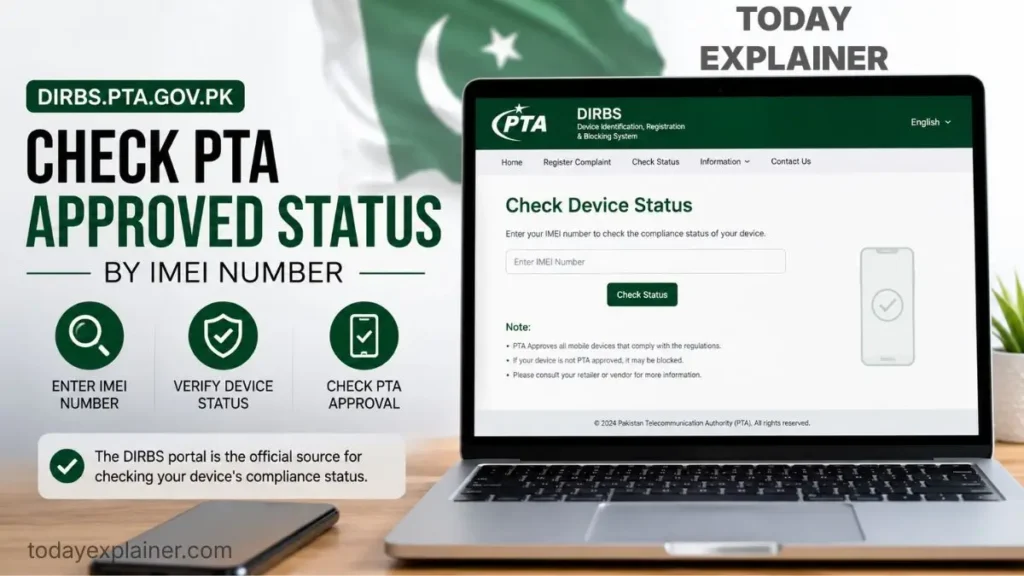
Q: Where do I check my phone’s registration status? A: Dial *#06# for your IMEI, then check it on the official DIRBS portal or via the PTA’s SMS verification service.
Q: Are tablets and smartwatches subject to PTA tax? A: Current reporting indicates DIRBS registration and tax apply specifically to mobile phones, not tablets or smartwatches.
Q: Can I contest the tax amount if I think my used phone was overvalued? A: Some guidance suggests submitting your original purchase invoice within a set window for a possible valuation review, though this should be confirmed directly with FBR/PTA.
Q: Why do imported phones cost so much more in Pakistan than abroad? A: Combined customs duty, regulatory duty, sales tax, and (for non-filers) withholding tax are layered on top of the device’s assessed value, often adding a large percentage to the effective price.
Q: Will the 25% rate be reduced in a future budget? A: It’s possible — the reduction proposal was shelved rather than rejected outright, and continued public and overseas-Pakistani pressure could see it revisited in a future budget cycle.
Q: Is the tax the same for iPhones and Android flagships of similar price? A: Broadly yes — reporting indicates tax is based on assessed device value rather than operating system, so a similarly priced flagship Android phone falls into the same duty range as an equivalent iPhone.
Where to Verify Prices & Specs
- PTA DIRBS Portal — dirbs.pta.gov.pk — for official registration status and live tax calculation
- Federal Board of Revenue (FBR) — fbr.gov.pk — for official valuation rulings and notifications
- ProPakistani — for ongoing coverage of budget and telecom policy developments
- WhatMobile — for phone specifications and local pricing context
Discussion
Have you registered a phone under the new valuation ruling, and did the savings match what’s being reported? If you’ve used Passport registration as an overseas Pakistani, how did the process actually go for you? And with the rate-cut proposal shelved for now, what would actually move the needle for you — a lower rate, or more models added to the reduced valuation list?
Prices and tax figures in this article were last checked in August 2026 and may vary by device, registration route, and daily exchange rate.