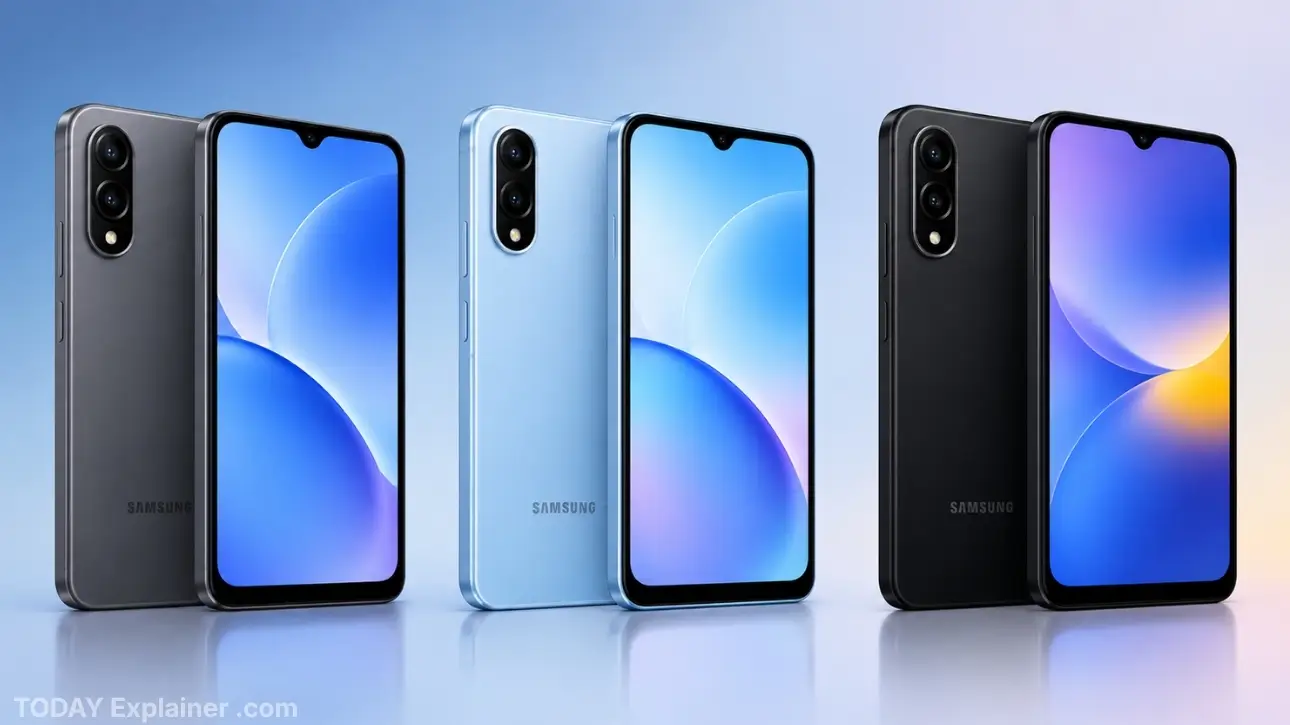
Samsung didn’t hold an event for this one. No stage, no teaser campaign just a quiet blog post on Samsung Newsroom France and matching press releases in Norway and Sweden, and the Galaxy A18 4G was official. Sales start September 18.
On paper, it reads like a routine refresh. In practice, it’s a €80-to-100 price increase on a phone that gives you less RAM than the model it replaces. That’s the story most coverage skipped.
At a glance
| Galaxy A18 4G | Galaxy A17 4G (2025) | |
|---|---|---|
| Price at launch | €279 (128GB/4GB), €299 in some markets | €199 (128GB/6GB) |
| Chipset | Exynos 1610 (new, undocumented) | MediaTek Helio G99 |
| RAM | 4GB | 6GB |
| Display | 6.7″ Super AMOLED, 90Hz, 2340×1080 | Same |
| Battery | 5,000mAh, 25W, 1,200 charge cycles | 5,000mAh, 25W |
| Rear camera | 50MP main (f/1.8, no OIS) + 5MP ultra-wide + 2MP macro | Same setup |
| Build | IP64 | IP54 |
| OS / updates | Android 17, One UI 9, 6 years of OS + security updates (to 2032) | Fewer guaranteed years |
| Storage | 128GB / 256GB (256GB seen in Norway, Sweden) | 128GB |
The chip swap nobody can explain yet
The headline hardware change is the processor. Samsung has dropped the familiar MediaTek Helio G99 — the chip that powered the A17 4G and half of Samsung’s budget lineup for two years — in favor of something called the Exynos 1610. Samsung hasn’t published a spec sheet for it. There’s no die shrink number, no core configuration, no benchmark Samsung is willing to put its name to.
What’s leaked so far, mostly from kernel source analysis, suggests an upgraded image signal processor capable of 4K/60fps video and modern codec support (HEVC, H.264, VP9). Beyond that, buyers are the beta testers. Early Geekbench listings for this phone actually showed a Helio G99 configuration before the European Exynos variant surfaced, which tells you how late in the process this swap happened.
If you’re chasing raw performance numbers, there simply aren’t any independent ones yet.
What actually got better
Two things, concretely:
- IP64 vs IP54. The A17 was only splash-resistant against light rain. The A18 is now dust-tight (the “6” in IP64) and better protected against water jets. It’s a real upgrade, if a narrow one.
- Battery longevity. Samsung is now quoting a 1,200-cycle rating for the 5,000mAh cell — a number budget phones rarely publish. In theory that’s a battery that ages more slowly than a typical entry-level pack, though there’s no independent verification yet of how Samsung is measuring it.
What didn’t change
Everything else. Same 6.7-inch Super AMOLED panel at 90Hz. Same 5,000mAh battery capacity and 25W charging speed. Same triple-camera layout — 50MP main, 5MP ultra-wide, 2MP macro — and the main sensor still has no optical image stabilization, so low-light and video shots will shake as much as they did last year. Selfie camera stays behind a notch rather than a punch-hole. Video capture on the rear cameras tops out at 1080p/30fps.
In other words, if you already own an A17 4G, there’s very little pulling you toward this one on hardware alone.
Software: the one clear win
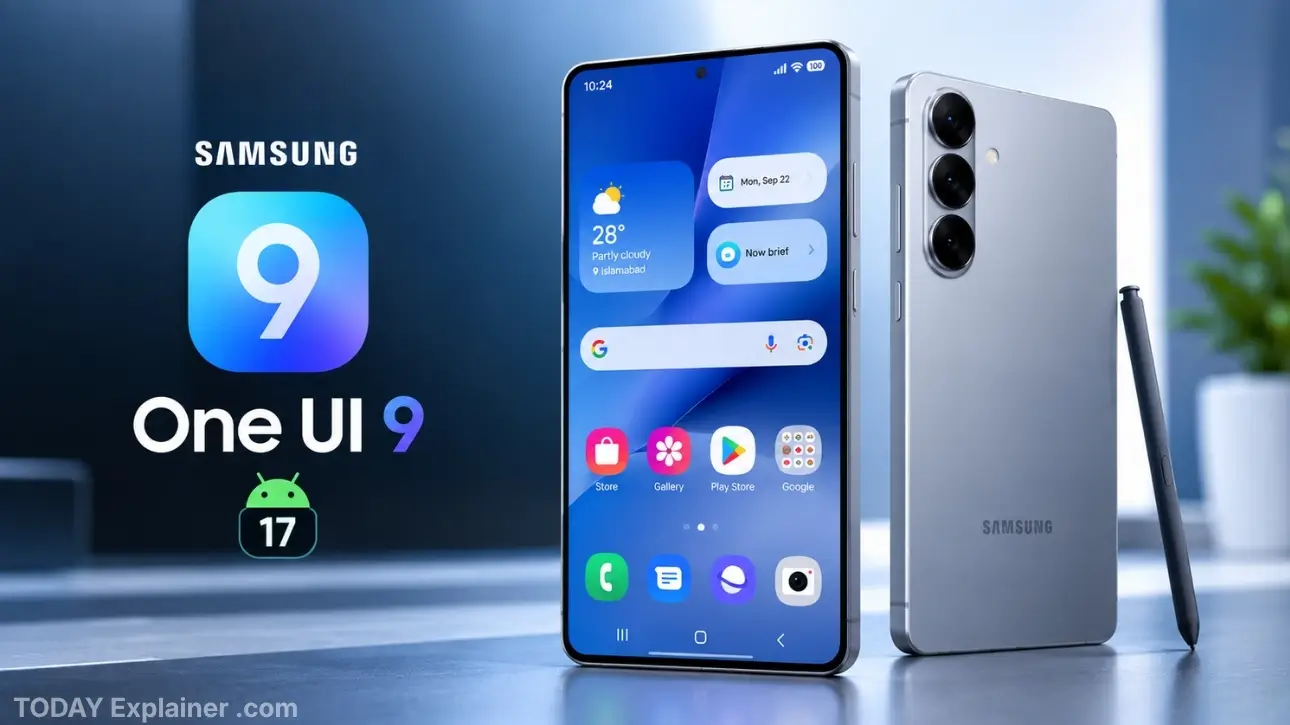
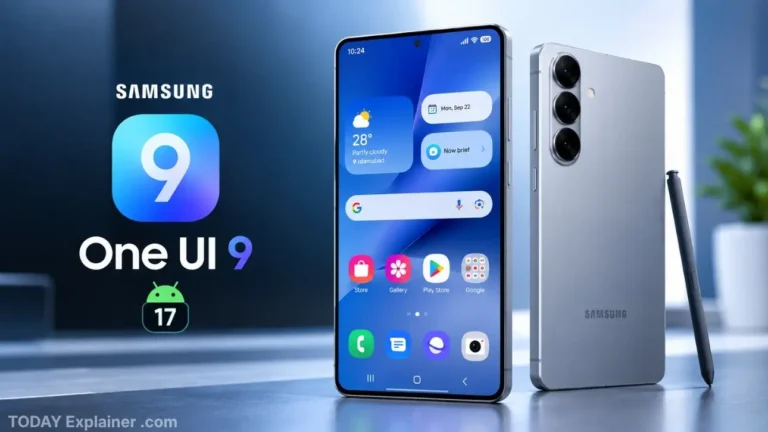
Samsung is committing to six generations of OS updates and six years of security patches, running through 2032. For a phone in this price bracket, that’s genuinely rare — most budget Android phones get two to four years, if that. Out of the box it ships with Android 17 and One UI 9.
Samsung also mentioned Gemini integration and a refreshed Circle to Search in its announcement, though the A18 4G doesn’t get the fuller “Galaxy AI” feature set reserved for higher-tier models. Treat this as baseline AI assistant support, not a differentiator.
The price problem, in plain numbers
This is the part the spec sheet doesn’t say out loud: the Galaxy A17 4G launched in 2025 at €199 with 6GB of RAM. The Galaxy A18 4G launches at €279–€299 with 4GB of RAM. That’s a price increase of 40–50%, paired with a downgrade in memory.
Samsung isn’t hiding this because of anything sneaky — global memory chip prices spiked through 2026, and every budget phone maker is absorbing higher component costs somehow. But it does mean the comparison shoppers actually care about — “what do I get for the extra money” — doesn’t favor the A18 4G on paper. The A17 4G, meanwhile, has already dropped to around €160 at retail with the better memory configuration intact.
Availability
Confirmed markets so far are France (128GB/4GB at €279) and the Nordics — Norway and Sweden, where Samsung’s press release also lists a 256GB variant (NOK/SEK 5,190 versus NOK/SEK 3,290 for 128GB). Colors are Gray, Light Blue, and Black. Wider European rollout is expected but unconfirmed at time of writing. There’s no word yet on UK or US availability, and no 5G variant has been announced — this is a 4G-only launch for now.
Should you buy it?
Skip it if you already have an A17 4G, a similar 2024–2025 budget Samsung phone, or you’re primarily buying on specs-per-euro — the A17 4G at its current discounted price is the better deal on paper.
Consider it if long-term software support matters more to you than raw specs — six years of security patches is unusual at this price and means the phone stays viable well into 2032 — or if the IP64 rating (dust protection specifically) solves a real problem for how you use your phone.
Wait if you can hold off a few weeks: reviews with actual Exynos 1610 benchmarks should surface soon, and it’s unclear whether the €279 launch price holds once the phone reaches more markets or whether early promotional pricing applies.
FAQ
Does the Galaxy A18 4G support 5G? No. This is a 4G-only launch. A 5G variant hasn’t been announced.
How much RAM does the Galaxy A18 4G have? 4GB, across both the 128GB and 256GB storage configurations — less than the A17 4G’s 6GB.
What processor is inside the Galaxy A18 4G? A new, officially undocumented Samsung Exynos 1610, replacing the Helio G99 used in the A17 4G.
Is the Galaxy A18 4G water resistant? It carries an IP64 rating — dust-tight and resistant to water splashing from any direction, an upgrade from the A17’s IP54.
Why is the Galaxy A18 4G more expensive than the A17 4G? Samsung hasn’t given an official reason, but the launch coincides with a broader rise in memory and component costs across the industry in 2026, which is also why the RAM dropped from 6GB to 4GB at a similar price tier.