Table of Contents
- Introduction — Why This Matters
- Background / Context
- Key Specs & Terms Explained
- Comparison Table (Pixel 11 Pro vs Pixel 10 Pro)
- Individual Breakdown
- Why This Matters (Buyer Decision Factors)
- What to Expect Next (Category Trends)
- Common Misconceptions
- Recent Developments
- Real Buyer Scenarios
- Buying Tips for This Price Range
- Conclusion and Final Verdict
- FAQs
- Where to Verify Prices & Specs
- Discussion
Introduction — Why This Matters
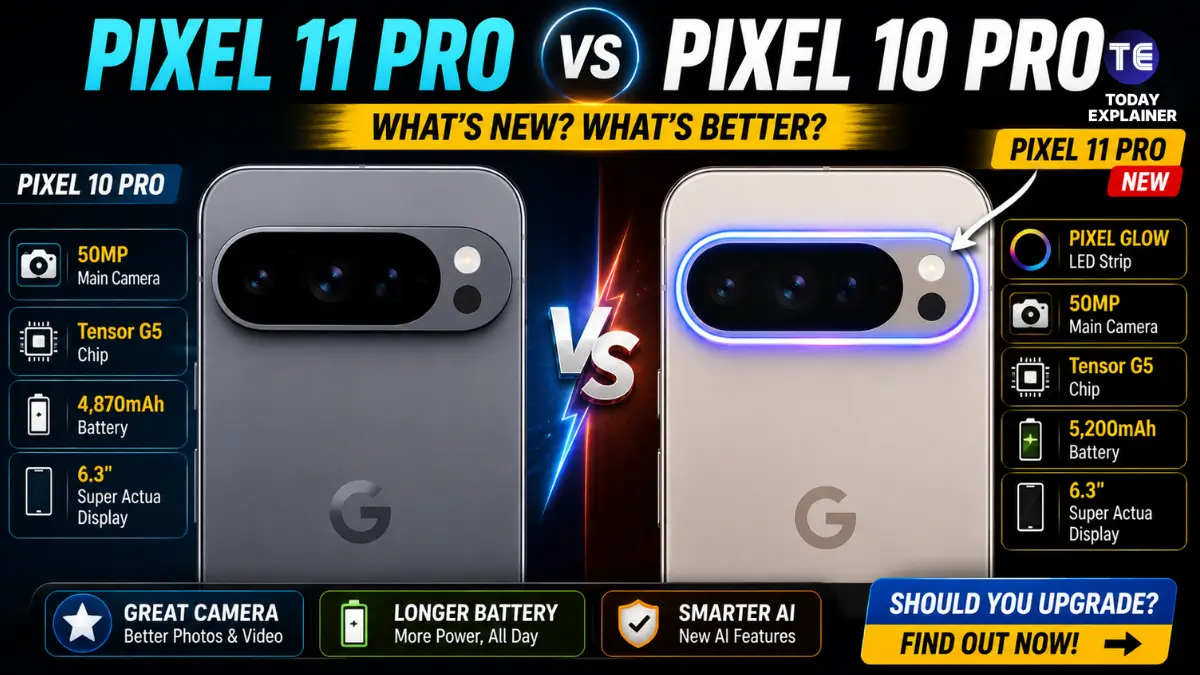
Google just held its Made by Google event on August 12, 2026, and the Pixel 11 series is now official. If you’re already carrying a Pixel 10 Pro, the question isn’t whether the Pixel 11 Pro exists — it’s whether the new Tensor G6 chip, the glowing “Pixel Glow” light strip, and the on-device Gemini upgrades actually change how the phone feels to use day to day, or whether this is a spec-sheet refresh you can comfortably skip.
That question matters more in Pakistan than it does in the US or UK, because Google doesn’t sell Pixel phones here officially. Every Pixel 11 Pro that ends up in Karachi, Lahore, or Islamabad arrives through an importer, and importers price in exchange rate swings, shipping, and PTA tax on top of Google’s US sticker price. Before you decide to import one — or hold on to your Pixel 10 Pro for another cycle — it’s worth understanding exactly what changed under the hood.
We researched official Google announcements, early hands-on coverage from outlets like Android Authority, Android Headlines, GSMArena, and Notebookcheck, and Pakistani price trackers to build this guide. Google’s own product pages confirm the Pixel 11 family is built around the Tensor G6 chip that runs the latest Gemini Nano model, alongside major camera upgrades and a thinner camera bar.

This guide covers what’s genuinely new in the Pixel 11 Pro, what quietly got worse (yes, there are downgrades this year), and how the pricing shakes out for buyers in Pakistan who are considering an import.
Quick Answer: If your Pixel 10 Pro is under a year old and still fast, the Pixel 11 Pro is not an essential upgrade — the Tensor G6 gains are real but incremental, and this generation actually trims RAM and front-camera resolution on the base storage tier. It’s a stronger case for Pixel 9 Pro or older owners, or anyone who wants the new Pixel Glow LED and the longer 120x zoom.
Background / Context
The Pixel 10 series launched roughly a year ago and set a high bar for computational photography and AI features on Android. Since then, the segment has moved fast: RAM prices spiked sharply industry-wide in 2026, Qualcomm and MediaTek pushed faster modems into flagship phones, and Google leaned harder into “Gemini Intelligence” — bundling generative AI features directly into the camera, messaging, and search experience rather than treating AI as an add-on app.

The Pixel 11 series arrives into that environment. Google’s own announcement frames the phones around major camera upgrades, enhanced durability, and the company’s fastest, most powerful chip yet in the Tensor G6, built specifically to run the newest Gemini Nano model on-device. That on-device framing matters: Gemini Nano runs locally on the phone rather than in the cloud, which is faster and more private, but it also means the chip doing the heavy lifting determines how capable those AI features actually feel.
For Pakistani buyers, 2026 also brings the reality of a widening RAM shortage that’s pushed component costs up across the industry — a trend visible directly in this year’s Pixel lineup, where base RAM actually dropped instead of rising as it has in past generations.
Key Specs & Terms Explained
Before comparing the two phones spec-by-spec, here’s what the jargon actually means for how the phone performs in your hand.
- Tensor G6: Google’s sixth-generation custom chipset, built on a smaller, more efficient manufacturing process than the Tensor G5. It handles the phone’s processing, graphics, and — critically — the on-device AI models like Gemini Nano.
- LTPO OLED: A display panel type that can dynamically drop its refresh rate (as low as 1Hz) when showing static content, saving battery, while still ramping up to 120Hz for smooth scrolling and gaming.
- Titan security coprocessor: A dedicated security chip, separate from the main processor, that stores your fingerprint data, encryption keys, and other sensitive information so it can’t be extracted even if the main OS is compromised.
- Pro Zoom / Periscope telephoto: A folded lens design that lets the camera achieve much longer optical and hybrid zoom ranges (like 120x) without making the phone thicker.
- Gemini Nano: Google’s smallest, on-device AI model, designed to run features like call summarization, smart replies, and camera scene understanding directly on the phone without sending data to the cloud.
- Qi2 / Qi2.2 wireless charging: An updated wireless charging standard with built-in magnets (similar to Apple’s MagSafe) for more reliable alignment and, in the 2.2 revision, generally faster charging speeds.
- UFS storage (Zoned UFS): The type of flash memory used for internal storage. Faster UFS versions improve app load times and file transfer speeds; “zoned” storage is a newer approach Google says improves performance, though the technical details haven’t been fully disclosed.
- PTA approval: Pakistan Telecommunication Authority registration required for any imported phone’s IMEI to work on local networks long-term — without it, the phone loses cellular service after a short grace period.
| Term | Simple Definition | Why It Matters for Buyers |
|---|---|---|
| Tensor G6 | Google’s newest custom chip | Determines speed, AI features, and how long the phone stays fast |
| LTPO OLED | Adjustable refresh-rate display | Balances smooth visuals with better battery life |
| Titan coprocessor | Dedicated security chip | Protects fingerprint data and encryption keys |
| Pro Zoom | Periscope telephoto zoom | Lets you shoot usable photos from far away |
| Gemini Nano | On-device AI model | Powers AI features without needing internet |
| Qi2/Qi2.2 | Magnetic wireless charging standard | More reliable charging alignment and speed |
| PTA approval | Local network registration | Required for imported phones to keep working on Pakistani SIMs |
Comparison Table (Pixel 11 Pro vs Pixel 10 Pro)
| Phone | Price (PKR, import estimate) | Display | Chipset | RAM/Storage | Camera | Battery |
|---|---|---|---|---|---|---|
| Google Pixel 11 Pro | ~PKR 300,000–530,000 (unofficial import, varies by tracker and variant) | 6.3″ LTPO OLED, 120Hz, up to 3,600 nits peak | Tensor G6 (TSMC 2nm) | 12GB/256GB base; 16GB on 512GB/1TB | 50MP main + telephoto (120x Pro Zoom), 13MP selfie | 4,850mAh |
| Google Pixel 10 Pro | ~PKR 240,000–415,000 (import, prices softening post-launch of Pixel 11) | 6.3″ LTPO OLED, 120Hz, up to 3,300 nits peak | Tensor G5 (3nm) | 16GB across all storage tiers | 50MP main + telephoto (100x Pro Res Zoom), 42MP selfie | 4,870mAh |
Prices last checked August 2026 and may vary significantly by retailer, city, and import route. Neither phone is sold officially by Google in Pakistan, so treat every PKR figure here as an estimate, not a fixed retail price.
Individual Breakdown
Google Pixel 11 Pro — The AI-first refresh with a new light show
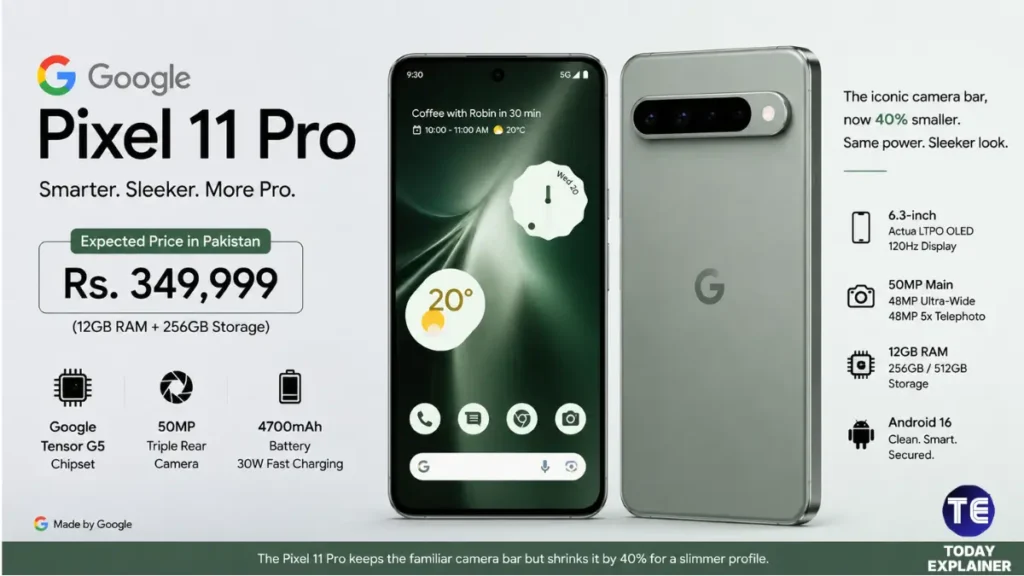
- Price in Pakistan: Roughly PKR 300,000–345,000 for the base 12GB/256GB variant based on early tracker estimates, climbing toward PKR 500,000+ for the 16GB/1TB model (note: prices vary by retailer/city and change frequently, and Google does not sell the Pixel 11 Pro directly in Pakistan)
- Key Specs:
- Tensor G6 chip built on TSMC’s 2nm process, 7-core CPU
- 6.3″ LTPO OLED display, 120Hz adaptive refresh, up to 3,600 nits peak brightness
- Gorilla Glass Victus 2 with an added anti-scratch shield
- 50MP main camera with a slightly larger sensor, telephoto up to 120x Pro Zoom
- 13MP selfie camera (down from 42MP on the Pixel 10 Pro)
- MediaTek M90 modem — Google’s first move away from Samsung Exynos modems in years
- 4,850mAh battery
- New Pixel Glow RGB LED light strip built into the camera bar
- What Stands Out: The telephoto jump to 120x zoom is a genuinely useful upgrade for anyone who photographs distant subjects — wildlife, events, or architecture — and early Geekbench Compute leaks show the Tensor G6’s GPU posting a real generational jump over the Tensor G5. The switch to a MediaTek modem is also worth watching, since it directly targets the signal drops and battery drain some Pixel owners have reported with Exynos modems in past generations.
- Where It Falls Short: The base 256GB model drops to 12GB of RAM instead of the 16GB every Pixel 10 Pro tier got, and the selfie camera resolution falls sharply to 13MP. Google has attributed the RAM cut to a steep spike in memory chip costs industry-wide, which is a real market pressure — but it’s still a downgrade buyers should know about before assuming “newer means better across the board.”
- Best For: Pixel 9 Pro or older owners due for an upgrade, zoom photography enthusiasts, and anyone who wants the newest Gemini AI features running at their fastest.
- Pros:
- Meaningfully longer zoom range (120x vs 100x)
- Brighter display (3,600 nits peak vs 3,300 nits)
- New MediaTek modem may fix long-standing signal/battery complaints
- Thinner, less bulky camera bar design
- Cons:
- Base RAM cut from 16GB to 12GB
- Selfie camera resolution drops significantly
- Battery capacity is slightly smaller, not larger
- No official Google sales channel in Pakistan, so pricing and warranty support depend entirely on the importer
Google Pixel 10 Pro — Still a very capable flagship a year later
- Price in Pakistan: Roughly PKR 240,000–285,000 for the base variant, now likely to see price cuts from importers now that the Pixel 11 Pro has launched (note: prices vary by retailer/city and change frequently)
- Key Specs:
- Tensor G5 chip (3nm), Titan M2 security coprocessor
- 6.3″ LTPO OLED display, 120Hz, up to 3,300 nits peak brightness
- 50MP main, 48MP ultrawide, 48MP periscope telephoto (up to 100x Pro Res Zoom)
- 42MP selfie camera
- 16GB RAM across every storage configuration
- 4,870mAh battery, 30W wired charging, 15W Qi2 wireless charging
- IP68 dust and water resistance
- What Stands Out: The Pixel 10 Pro’s 16GB RAM floor across every storage tier is arguably more useful day-to-day than the Pixel 11 Pro’s headline chip upgrade, especially for heavy multitaskers. Its 42MP selfie camera also remains sharper on paper than its successor’s.
- Where It Falls Short: The Tensor G5’s GPU trails the newer Tensor G6 in raw performance, and its zoom tops out at 100x versus the Pixel 11 Pro’s 120x — a real gap for anyone who shoots distant subjects often.
- Best For: Buyers who already own one and aren’t chasing the newest AI silicon, or anyone shopping the secondary/import market who wants flagship performance at a meaningfully lower price than the Pixel 11 Pro.
- Pros:
- Higher RAM across the board (16GB minimum)
- Sharper front camera
- Likely price drops now that it’s the “previous generation” phone
- Proven track record — no early-adopter bugs to worry about
- Cons:
- Older Tensor G5 chip, weaker GPU than Tensor G6
- Shorter maximum zoom range
- No Pixel Glow LED or the newest Gemini Nano optimizations
- Also unofficial in Pakistan, same import/PTA considerations apply
Why This Matters (Buyer Decision Factors)
Camera zoom range vs. camera resolution
The Pixel 11 Pro trades selfie resolution for a longer telephoto reach. If you mostly shoot people and everyday moments up close, the Pixel 10 Pro’s 42MP front camera may actually serve you better. If you frequently zoom in on distant subjects, the jump to 120x is the more meaningful real-world upgrade.
RAM ceiling vs. RAM floor
Because the Pixel 11 Pro’s base tier drops to 12GB RAM while the Pixel 10 Pro guarantees 16GB on every configuration, buyers who want to match or exceed their current RAM need to pay up for the Pixel 11 Pro’s 512GB tier. That changes the effective price comparison significantly — you’re not really comparing base model to base model anymore.
Modem reliability
The move to a MediaTek modem on the Pixel 11 series is one of the more consequential under-the-hood changes this year, since it directly addresses signal strength and battery drain issues some Pixel 9 and Pixel 10 owners reported with Exynos-based modems. This won’t show up on a spec sheet comparison, but it could matter more than the chip generation itself for day-to-day reliability on Pakistani carrier networks.
Import cost vs. official retail price
Because neither phone is sold by Google in Pakistan, the “price” isn’t fixed the way it would be for a phone with an official local launch. Exchange rate shifts, PTA tax, and individual importer margins can move the real price by tens of thousands of rupees between two sellers of the exact same variant.
Buying Tip: Before comparing listed PKR prices across different sites, always confirm whether PTA tax is included in the quoted figure — unofficial import listings frequently quote the device price alone and add PTA tax separately at checkout, which can make two “identical” listings differ by Rs. 60,000–90,000 or more.
What to Expect Next (Category Trends)
- Pixel 11a launch later in the year: Google typically follows its flagship launch with a mid-range “a” series phone a few months later, which will likely bring a lighter version of the Tensor G6 and could be the more sensible import option for budget-conscious Pakistani buyers.
- RAM prices staying elevated: The industry-wide RAM cost spike that pushed Google to trim base RAM on the Pixel 11 series isn’t expected to ease quickly, which could mean similar RAM-vs-price tradeoffs across other flagship phones through the rest of 2026.
- Modem competition intensifying: With Google now using a MediaTek modem instead of Samsung’s Exynos, expect closer scrutiny and comparisons of real-world signal performance among Pixel, Samsung, and other Android flagships in the coming months as reviewers test the change over time.
Common Misconceptions
Myth: A newer Tensor chip number always means a faster, better phone in every way. Reality: The Tensor G6 does bring genuine CPU and GPU gains, but this generation also cut base RAM and selfie camera resolution — proof that “newer” doesn’t automatically mean “better across every spec.”
Myth: Grey-market imported Pixel phones are just as safe to buy as officially sold phones. Reality: Imported units can be perfectly functional, but you lose Google’s local warranty support, and you’re responsible for PTA registration yourself — skip that step and the phone stops working on local SIMs after the grace period.
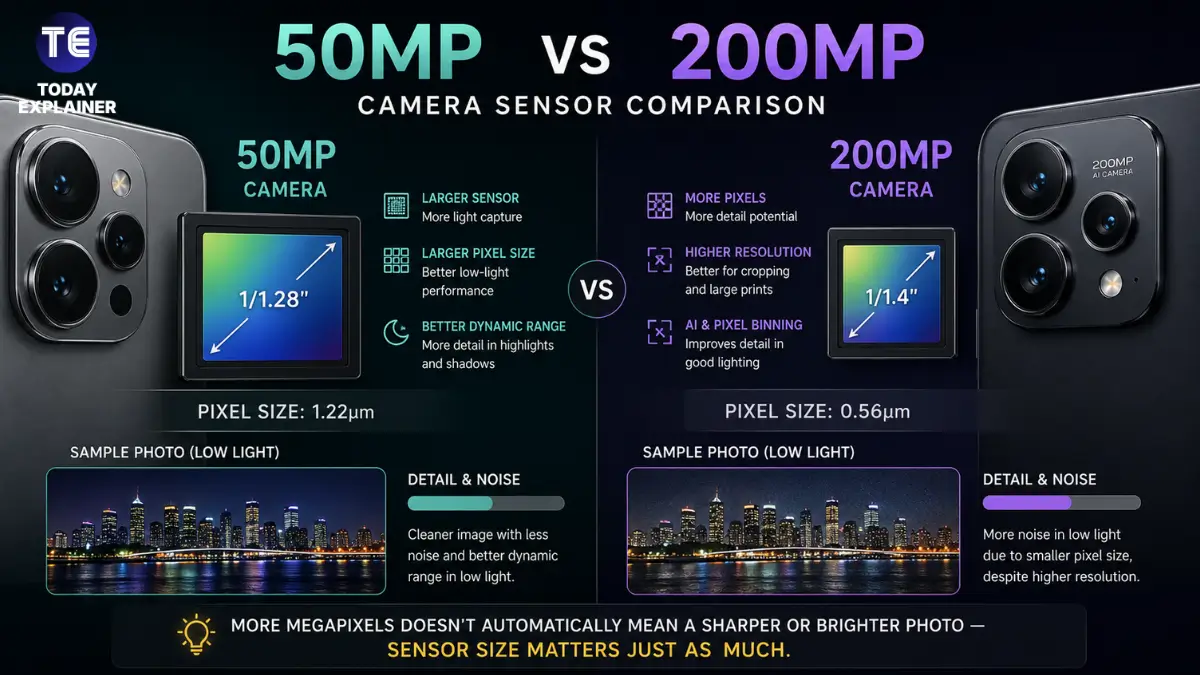
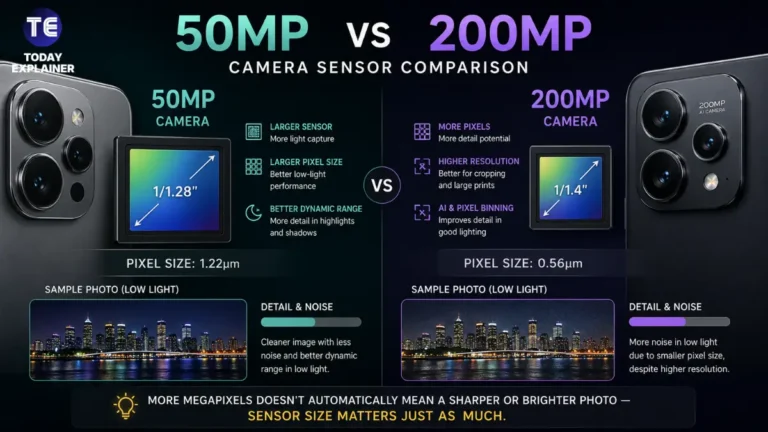
Myth: Higher megapixel count on a camera always means better photo quality. Reality: The Pixel 10 Pro’s 42MP selfie camera has more megapixels than the Pixel 11 Pro’s 13MP unit, but resolution alone doesn’t determine image quality — sensor size, software processing, and lens quality matter just as much, and early testing hasn’t confirmed the actual real-world difference yet.

Myth: You should always buy the very latest model for the best long-term value. Reality: Buying last year’s flagship shortly after a new model launches often gets you nearly identical core performance at a meaningfully lower price, since import prices on the outgoing model typically drop once its successor is official.
Myth: PTA tax is a fixed, predictable amount everyone pays the same. Reality: PTA tax varies based on the phone’s declared value, whether you register via passport or CNIC, and current currency exchange rates — two buyers importing the same phone in different months can pay noticeably different tax amounts.
Myth: On-device AI features like Gemini Nano work identically regardless of which phone chip you have. Reality: On-device AI performance is directly tied to the chip running it — Google specifically built the Tensor G6 to run its newest Gemini Nano model, which suggests older chips like the Tensor G5 may run some newer AI features more slowly or not receive them at all in future updates.
Myth: A smaller battery capacity number always means noticeably worse battery life. Reality: The Pixel 11 Pro’s battery is only marginally smaller than the Pixel 10 Pro’s, and actual battery life depends heavily on chip efficiency and software optimization — a more efficient chip can offset a slightly smaller cell entirely.
Recent Developments
- August 12, 2026: Google officially unveiled the Pixel 11, Pixel 11 Pro, and Pixel 11 Pro XL at its Made by Google event in New York City, alongside pre-orders opening the same day.
- August 2026: Early Geekbench listings for the Pixel 11 Pro XL surfaced ahead of launch, showing Tensor G6 GPU performance gains over the Tensor G5, though still behind top Qualcomm Snapdragon GPUs.
- Mid-2026: Google confirmed the shift away from Samsung Exynos modems to a MediaTek M90 modem across the Pixel 11 lineup — the most significant connectivity change in several Pixel generations.
- May 2026: The “Pixel Glow” LED feature was first previewed in leaked footage and later confirmed through official teasers ahead of launch, eventually appearing in marketing materials possibly under the branding “HiLight.”
- Throughout 2026: Industry-wide RAM price increases were cited by Google as the reason base storage tiers on the Pixel 11 series now start with less RAM (12GB) than the outgoing Pixel 10 Pro’s uniform 16GB.
- Ongoing: Pakistani price trackers list Pixel 11 series pricing as “expected” rather than official, since Google has not confirmed a direct Pakistani retail launch, meaning local availability continues to depend on grey-market importers.
Real Buyer Scenarios
The content creator chasing better zoom. A freelance photographer in Lahore who shoots events and travel content finds their Pixel 10 Pro’s 100x zoom limiting during outdoor shoots. For them, the Pixel 11 Pro’s 120x Pro Zoom and brighter display are a tangible, work-relevant upgrade worth the import cost.
The university student on a tight budget. A student in Faisalabad wants a capable Android flagship for classes, note-taking apps, and light gaming but can’t justify PKR 300,000+. For them, waiting for import prices on the Pixel 10 Pro to drop further — or watching for the more affordable Pixel 11a later in the year — makes more financial sense than chasing the Pixel 11 Pro on day one.
The Pixel 9 Pro owner overdue for an upgrade. A professional in Islamabad who’s been on a Pixel 9 Pro for two years is due for a refresh regardless of which model they pick. For them, jumping straight to the Pixel 11 Pro makes sense — they’ll feel the Tensor G6 performance gains, the brighter display, and the longer zoom far more than a Pixel 10 Pro owner would, since they’re skipping an entire generation.
Buying Tips for This Price Range
- Confirm PTA approval status before paying. Ask the seller directly whether the IMEI is PTA-registered or whether you’ll need to register it yourself — unregistered phones lose network access after the initial grace period.
- Compare total cost, not just device price. Factor in PTA tax, any customs handling fees, and the exchange rate used at the time of your purchase before comparing listings from different importers.
- Buy from sellers offering some form of local warranty or return window. Since Google doesn’t offer official support in Pakistan, a local seller’s own warranty terms are your main protection if something goes wrong.
- Don’t assume the newest model is automatically the better value. As this comparison shows, the Pixel 11 Pro cuts RAM and selfie resolution on its base tier — check whether the changes that matter to you are upgrades or downgrades before paying a premium.
- Watch import prices for a few weeks after launch. Pixel 11 Pro pricing from Pakistani trackers is still labeled “expected” as of this writing and could shift once real import volume and demand settle.
- Check which specific variant you’re being quoted. RAM and storage configurations vary meaningfully this generation (12GB vs 16GB), so make sure the price you’re comparing matches the exact variant you want.
- Keep your purchase receipt and IMEI documentation. This is essential both for PTA registration and for any resale value down the line, since buyers increasingly ask for proof of legitimate import.
Conclusion and Final Verdict
- Best overall: Pixel 11 Pro, if you want the newest chip, longer zoom, and are upgrading from a Pixel 9 Pro or earlier.
- Best value: Pixel 10 Pro, now likely to see import price cuts, with more RAM guaranteed across every storage tier.
- Best camera reach: Pixel 11 Pro, thanks to its 120x Pro Zoom telephoto.
- Best for selfies: Pixel 10 Pro, with its notably higher-resolution 42MP front camera.
The Bottom Line: The Pixel 11 Pro is a real generational step forward in chip performance, zoom range, and display brightness, and the new Pixel Glow LED is a genuinely thoughtful touch rather than a gimmick. But it’s not a clean upgrade in every direction — Google trimmed base RAM and selfie camera resolution to manage rising component costs, and neither phone is officially sold in Pakistan, so your actual price and warranty experience depends heavily on the importer you choose. If your Pixel 10 Pro is working well, there’s no urgency to switch; if you’re coming from an older Pixel or a different brand entirely, the Pixel 11 Pro is the stronger long-term buy.
FAQs
Q: Is the Google Pixel 11 Pro officially available in Pakistan? A: No. Google does not sell Pixel phones through an official retail channel in Pakistan, so every unit available locally comes through grey-market importers, and pricing is an estimate rather than a fixed retail figure.

Q: What is the main chip upgrade in the Pixel 11 Pro? A: It uses the new Tensor G6 chip, built on a more advanced manufacturing process than the Pixel 10 Pro’s Tensor G5, with a 7-core CPU design and stronger GPU performance.
Q: What is Pixel Glow? A: It’s a new RGB LED light strip built into the Pixel 11 Pro’s camera bar that lights up in different colors to indicate notifications, calls from specific contacts, or Gemini activity, especially useful when the phone is placed face-down.
Q: Does the Pixel 11 Pro have more RAM than the Pixel 10 Pro? A: Not on the base model. The Pixel 11 Pro’s entry 256GB tier has 12GB RAM, down from the Pixel 10 Pro’s uniform 16GB across all storage options. You need the 512GB or 1TB Pixel 11 Pro variant to match or exceed that RAM.
Q: Why did the selfie camera resolution drop on the Pixel 11 Pro? A: Early spec sheets and hands-on reports indicate the front camera moved from 42MP on the Pixel 10 Pro to 13MP on the Pixel 11 Pro, though the exact reasoning hasn’t been officially detailed by Google beyond general camera hardware changes across the lineup.
Q: What is the maximum zoom on the Pixel 11 Pro? A: Up to 120x Pro Zoom, an increase from the Pixel 10 Pro’s 100x Pro Res Zoom.
Q: Does the Pixel 11 Pro use a different modem than the Pixel 10 Pro? A: Yes. The Pixel 11 series switches to a MediaTek M90 modem, moving away from the Samsung Exynos modems used in recent Pixel generations.
Q: Is the Pixel 11 Pro’s battery bigger than the Pixel 10 Pro’s? A: No, it’s very slightly smaller — roughly 4,850mAh versus 4,870mAh — though the difference is small enough that most users likely won’t notice it in daily use.
Q: How much PTA tax will I pay on an imported Pixel 11 Pro? A: PTA tax depends on the phone’s declared value, current exchange rates, and whether you register via CNIC or passport, so it varies by individual purchase — check the official PTA tax calculator closer to your purchase date for an accurate figure.
Q: Should I upgrade from a Pixel 10 Pro to a Pixel 11 Pro? A: If your Pixel 10 Pro is still fast and meeting your needs, it’s not an essential upgrade this year given the RAM and selfie camera tradeoffs. It’s a stronger case if you specifically want the longer zoom, brighter display, or Pixel Glow feature.
Q: What’s the difference between the Pixel 11 Pro and Pixel 11 Pro XL? A: The Pro XL has a larger 6.8-inch display, a bigger battery, and in some configurations more RAM at the top storage tier, while the standard Pixel 11 Pro keeps the more compact 6.3-inch size.
Q: Does the Pixel 11 Pro support 5G in Pakistan? A: The phone supports 5G hardware, but actual 5G network availability depends on your local carrier’s rollout in your city and area, not the phone itself.
Q: Is buying a phone that isn’t officially sold in Pakistan risky? A: It carries more risk than buying an officially launched phone, mainly around warranty support and after-sales service, so buying from a reputable importer with clear return/warranty terms matters more than usual.
Q: How many years of software updates does the Pixel 11 Pro get? A: Recent Pixel Pro models have typically offered up to seven years of major Android updates; check the official Google Store page at launch to confirm this holds for the Pixel 11 Pro specifically.
Q: Can I trade in my Pixel 10 Pro toward a Pixel 11 Pro in Pakistan? A: Since there’s no official Google retail presence in Pakistan, formal trade-in programs aren’t available locally — any trade-in would need to be arranged privately with a local seller or through resale marketplaces.
Where to Verify Prices & Specs
- GSMArena — for detailed, verified hardware specifications
- Google Store (store.google.com) — for official pricing in markets where Pixel is directly sold
- WhatMobile — for Pakistan-specific price tracking
- PriceOye — for local Pakistani retail and import pricing comparisons
Discussion
Are you planning to import a Pixel 11 Pro, or is the Tensor G6 upgrade not enough to justify the cost given the RAM and camera tradeoffs? If you already own a Pixel 10 Pro, what would actually convince you to upgrade — the zoom range, the Pixel Glow feature, or something else entirely? Let us know your priorities in the comments below.