Table of Contents
- Introduction — Why This Matters
- Background / Context
- Key Specs & Terms Explained
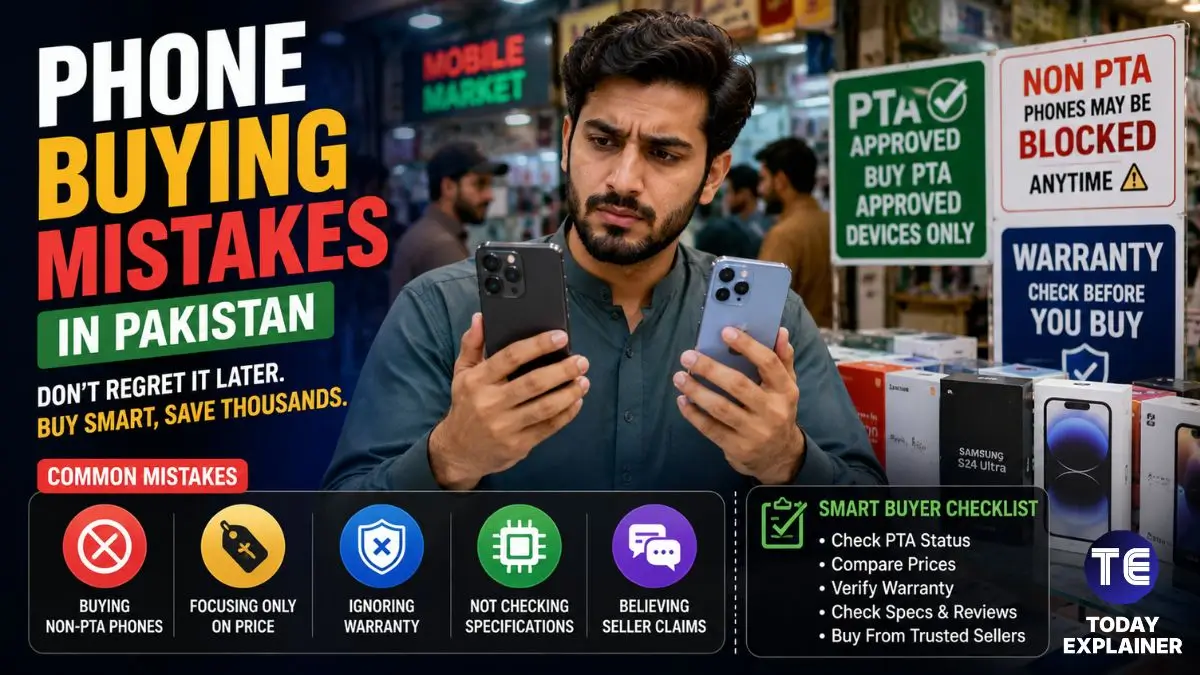
- The 7 Mistakes at a Glance
- Individual Breakdown of Each Mistake
- Why This Matters (Buyer Decision Factors)
- What to Expect Next (Category Trends)
- Common Misconceptions
- Recent Developments (Last 6–12 Months)
- Real Buyer Scenarios
- Buying Tips for This Price Range
- Conclusion and Final Verdict
- FAQs
- Where to Verify Prices & Specs
- Discussion
Introduction — Why This Matters
Buying a phone in Pakistan is rarely as simple as walking into a shop and picking the best-looking box. Between grey market imports, confusing PTA rules, inflated “discounted” prices, and shopkeepers who know exactly which shortcuts to take with a first-time buyer, it’s easy to end up with a phone that gets blocked from your network, can’t be repaired locally, or simply wasn’t worth the price you paid.
We researched official PTA/DIRBS registration procedures, common retailer practices across Pakistani mobile markets, and verified consumer complaints and forum discussions to build this guide. None of it requires technical expertise — just knowing what to check before you hand over your money.
This article walks through the seven mistakes we see buyers make most often, why each one costs money or causes headaches down the line, and exactly what to do instead. We’ll also cover the terms you need to understand, common misconceptions, and practical buying tips specific to the Pakistani market.
Quick Answer: The single most expensive mistake is buying a phone without confirming its PTA registration status first — an unregistered phone can get blocked from every Pakistani network after 60 days, turning an expensive smartphone into a WiFi-only device.
Background / Context
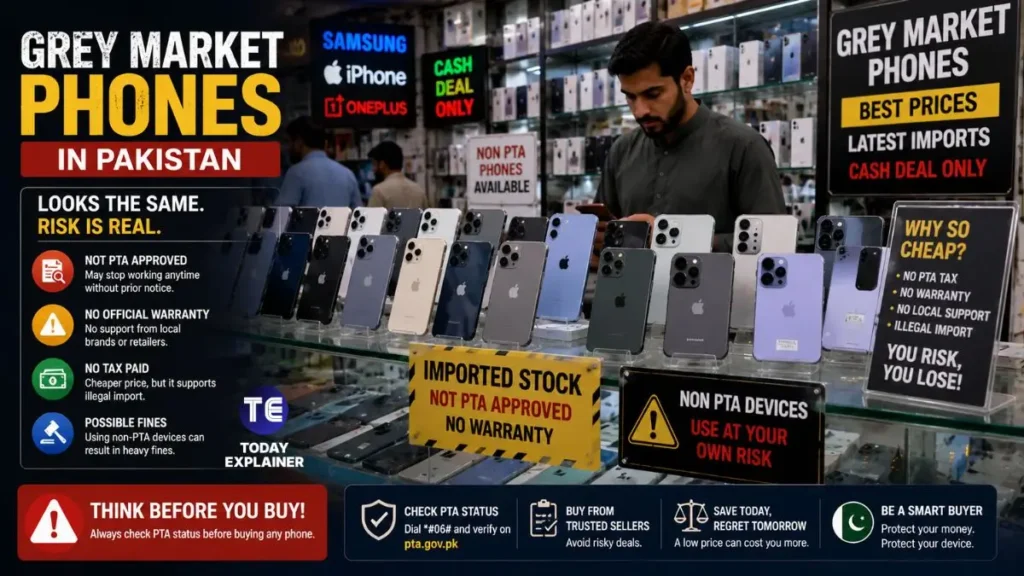
Pakistan’s phone market is unusual compared to most countries because of how many phones enter the country outside official, tax-paid retail channels. Devices arrive through overseas relatives, personal imports, and grey market resellers, alongside phones sold through authorized local retailers who pay the applicable duties upfront.
This is why PTA’s DIRBS (Device Identification, Registration and Blocking System) matters so much here — it’s the system that decides whether your phone’s IMEI is allowed to work with a local SIM long-term. In 2026, PTA has continued enforcing this system, and enforcement has tightened around import channels that were previously used to bring in unregistered devices at lower prices.
At the same time, prices for popular models keep shifting with the US dollar to PKR exchange rate, since import costs and PTA taxes are pegged to phone valuations. That means the “good deal” you saw advertised last month may already be outdated, and a phone that looked expensive in December might be more reasonably priced by the time Eid or back-to-school season rolls around.
Key Specs & Terms Explained
Before getting into the mistakes themselves, it helps to understand a few terms that come up constantly in Pakistani phone-buying conversations.
- PTA Approved — A phone whose IMEI is registered with PTA and cleared to work permanently on Pakistani mobile networks.
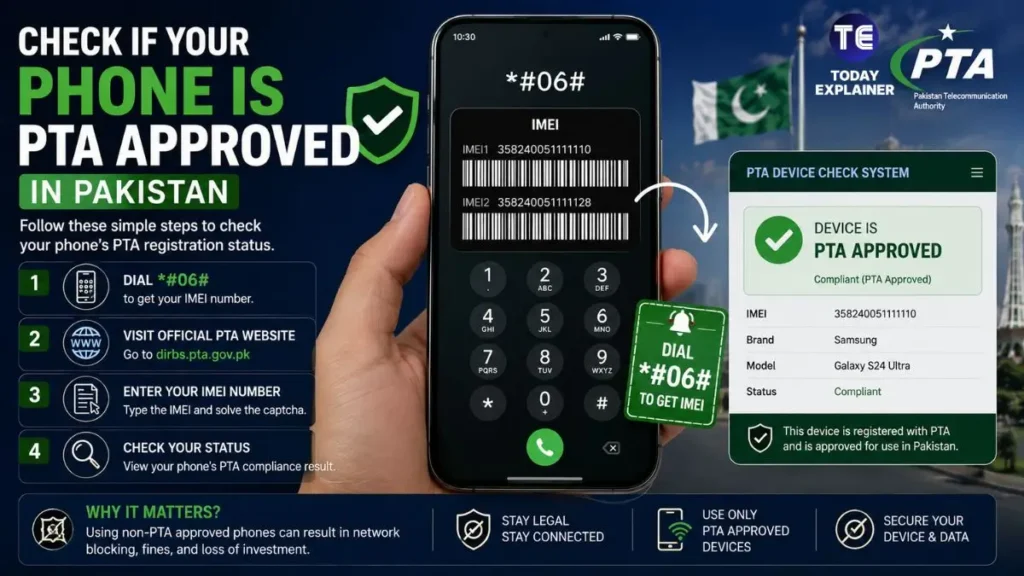
- IMEI (International Mobile Equipment Identity) — A 15-digit number unique to your phone, used to check registration status. You can see it by dialing
*#06#. - DIRBS — The PTA system (accessible at dirbs.pta.gov.pk) that registers, tracks, and can block non-compliant devices.
- Grey Market Phone — A phone imported and sold outside official, tax-paid retail channels — not necessarily fake, but not yet PTA-registered either.
- CNIC vs Passport Registration — Two registration categories on DIRBS; overseas Pakistanis and foreigners typically register differently than local CNIC holders, and tax amounts can differ.
- Grace Period — The window (currently 60 days from first local SIM use) before an unregistered phone gets blocked from all networks.
- Box-Packed / Sealed Pack — Marketing terms implying a phone is brand-new and unopened; doesn’t by itself confirm PTA status or authenticity.
- Panel/Screen Replacement — A common sign a used phone has been in an accident; original panels usually have consistent touch response and color accuracy.
| Term | Simple Definition | Why It Matters for Buyers |
|---|---|---|
| PTA Approved | IMEI is cleared on DIRBS to work long-term | Determines if your phone keeps working after 60 days |
| IMEI | Unique 15-digit phone ID | Needed to check registration and report theft |
| DIRBS | PTA’s registration/blocking database | Where registration status and tax are officially confirmed |
| Grey Market | Imported outside standard retail/tax channels | Often cheaper, but may need separate PTA registration and tax payment |
| Grace Period | 60 days before an unregistered phone is blocked | Missing this deadline can cut off calls, SMS, and data |
The 7 Mistakes at a Glance
| # | Mistake | Main Risk |
|---|---|---|
| 1 | Not checking PTA/IMEI status before buying | Phone gets blocked from all networks after 60 days |
| 2 | Trusting “sealed pack” claims without verification | Paying new-phone price for a used or refurbished unit |
| 3 | Ignoring the total cost of importing yourself | “Cheaper abroad” price ends up higher after tax and travel |
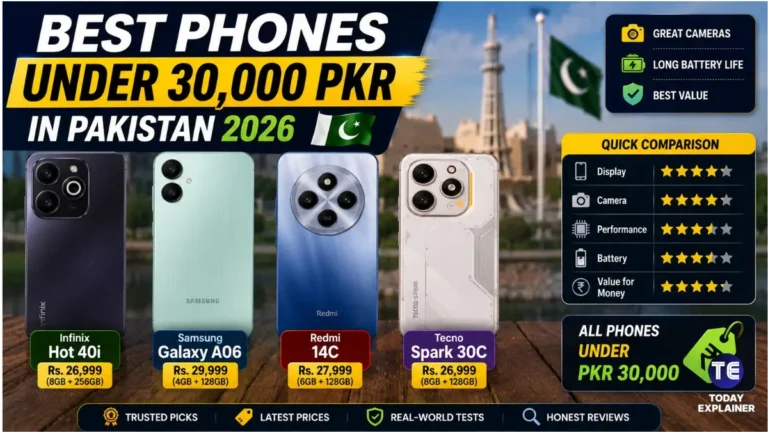
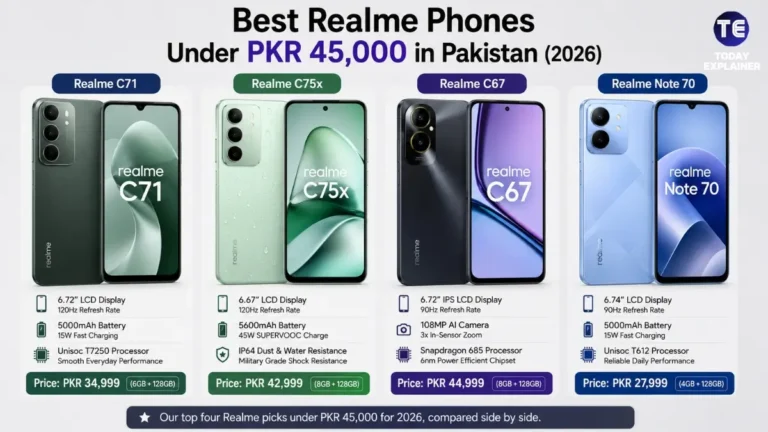
| 4 | Buying purely on RAM/storage numbers | Overpaying for specs that don’t match real-world performance |
| 5 | Skipping the warranty and receipt check | No recourse if the phone develops a fault |
| 6 | Buying second-hand without checking IMEI blacklist status | Ending up with a stolen or blocked device |
| 7 | Choosing a shop based on price alone | Losing after-sales support when something goes wrong |
Individual Breakdown of Each Mistake
Mistake 1 — Not Checking PTA/IMEI Status Before Buying
What It Looks Like: A buyer sees an attractive price on a phone — often from an overseas relative, a grey-market importer, or an online marketplace listing — and pays without confirming whether the phone is PTA-registered or how much tax registration would cost.
Why It Happens: Many buyers assume that if a phone works fine with a local SIM on day one, it’s automatically fine in the long term. It isn’t. Under current rules, a phone can work normally with a local SIM for 60 days before PTA registration becomes mandatory; after that, an unregistered device gets blocked from calls, SMS, and mobile data on all Pakistani networks, leaving it usable only over WiFi.
How to Avoid It: Before buying, dial *#06# on the phone to get its IMEI, then send it via SMS to 8484 or check it on the DIRBS portal (dirbs.pta.gov.pk) to see its current registration status and any applicable tax. If it isn’t registered, factor that tax into your total cost before agreeing on a price — sometimes what looked like a bargain ends up costing the same as a locally PTA-approved phone once registration tax is added.
Best For: Every buyer, but especially those buying from overseas relatives, online marketplaces, or grey-market retailers rather than authorized company stores.
Mistake 2 — Trusting “Sealed Pack” or “Box-Packed” Claims Without Verification
What It Looks Like: A shop advertises a phone as “sealed pack” or “box-packed, never opened” at new-phone pricing, but the device turns out to be a returned unit, a used phone repackaged, or a refurbished import.
Why It Happens: Resealing boxes and swapping accessories is unfortunately common in some informal retail channels, and buyers rarely check anything beyond the outer packaging before paying.
How to Avoid It: Check the IMEI printed on the box against the IMEI shown in the phone’s settings and the one revealed by dialing *#06# — they should match exactly. Look at battery health in the phone’s settings (a “new” phone with battery health noticeably below 100% is a red flag), and inspect the charging port and screen edges for wear that a genuinely unused phone wouldn’t have.

Best For: Anyone buying what’s advertised as a brand-new phone from a market stall, small retailer, or online seller rather than an authorized brand store.
Mistake 3 — Ignoring the Total Cost of Importing a Phone Yourself
What It Looks Like: A buyer compares a phone’s price abroad (Dubai, the US, the UK) to the local Pakistani price, sees a big gap, and assumes bringing it back personally or via a relative will be a straightforward saving.
Why It Happens: The upfront sticker price abroad often looks dramatically lower, but it doesn’t include travel costs, currency conversion, or the PTA registration tax that applies once the phone is used with a local SIM.
How to Avoid It: Add up the phone’s price abroad, any travel or shipping cost, and the estimated PTA tax for that model (tax varies by phone category and current exchange rates, and is confirmed only at the time of registration on DIRBS) before deciding. In many cases, the final total ends up close to — or sometimes higher than — the price of an already PTA-approved phone bought locally.
Best For: Buyers weighing “buy abroad and bring it in” against simply buying a PTA-approved phone from a Pakistani retailer.
Mistake 4 — Buying Purely Based on RAM/Storage Numbers
What It Looks Like: A buyer picks between two phones based only on which one lists a higher RAM number (say 8GB vs 6GB), assuming it will automatically feel faster, without looking at the chipset, software optimization, or real-world reviews.
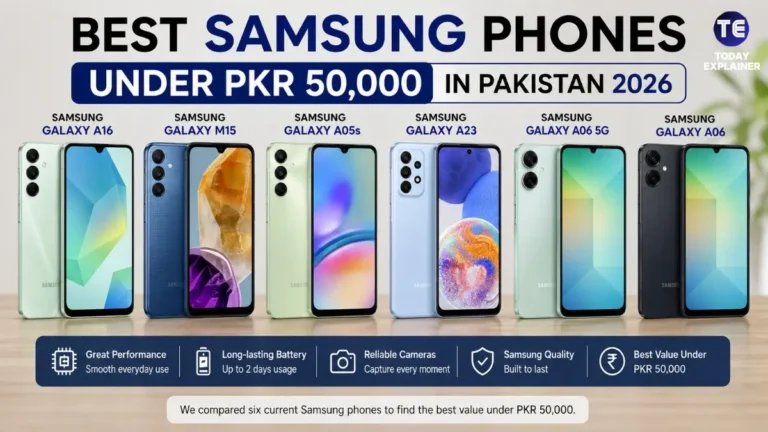
Why It Happens: RAM and storage are the easiest specs to compare at a glance, so they get outsized attention compared to less visible factors like chipset generation, which has a bigger real-world impact on speed and longevity.
How to Avoid It: Treat RAM and storage as one factor among several, not the deciding one. Cross-check the chipset model, look up independent benchmark or review comparisons, and consider whether the brand has a track record of pushing timely software updates for that phone.
Best For: First-time buyers or anyone upgrading who’s comparing multiple phones mainly through spec sheets rather than reviews.
Mistake 5 — Skipping the Warranty and Receipt Check
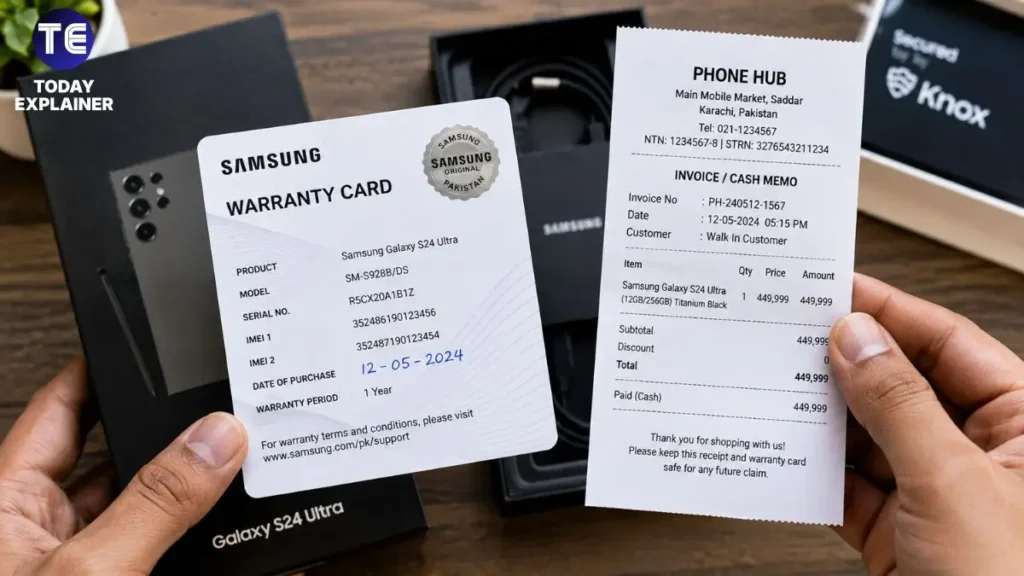
What It Looks Like: A buyer completes the purchase without confirming what warranty applies, whether it’s an official local warranty or an informal “shop warranty,” and without keeping a proper receipt.
Why It Happens: In the rush of comparing prices and negotiating, warranty terms and paperwork often get treated as an afterthought — until something goes wrong with the phone weeks or months later.
How to Avoid It: Ask specifically whether the phone carries the brand’s official Pakistani warranty or only a shop-provided warranty, get this in writing on the receipt, and confirm which authorized service center would honor a claim. Keep the original box, receipt, and warranty card together in one place.
Best For: Anyone buying from an independent retailer rather than a brand’s own official store or franchise.
Mistake 6 — Buying Second-Hand Without Checking IMEI Blacklist Status
What It Looks Like: A buyer purchases a used phone through an online marketplace or personal connection, checks that it turns on and works, but never verifies whether the IMEI has been reported lost, stolen, or already blocked.
Why It Happens: A used phone that powers on and connects to WiFi looks perfectly functional at the point of sale, so buyers assume everything is in order.
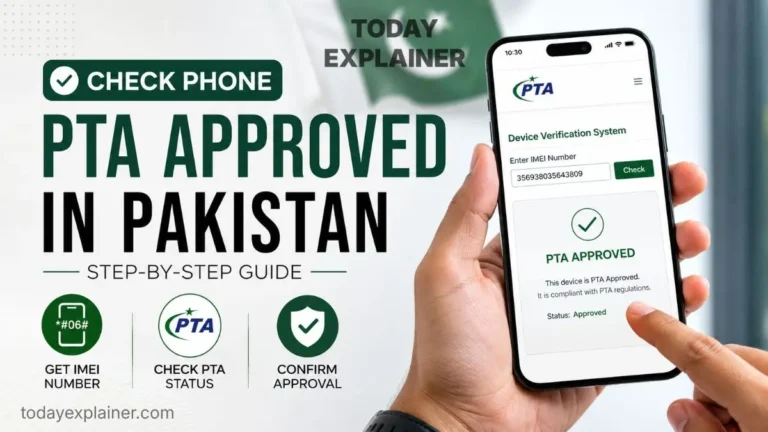
How to Avoid It: Before finalizing a second-hand purchase, get the IMEI and check its status through the DIRBS portal or the 8484 SMS service. Meet in person, insert your own SIM to confirm it makes calls and connects to mobile data (not just WiFi), and avoid paying in full before this check is complete.
Best For: Buyers considering second-hand or “used like new” phones through Facebook Marketplace, OLX, or similar listings.
Mistake 7 — Choosing a Shop Based on Price Alone
What It Looks Like: A buyer picks whichever shop quotes the lowest price for a given model, without considering the shop’s reputation, after-sales support, or willingness to help if the phone develops a fault soon after purchase.
Why It Happens: Price is the easiest thing to compare between shops, especially when several sellers are advertising the “same” phone at slightly different numbers.
How to Avoid It: Weigh a slightly higher price against a retailer’s reputation for honoring warranty claims, willingness to provide a proper receipt, and general standing (reviews, how long they’ve operated, whether they’re an authorized dealer for that brand). A small price difference is rarely worth losing after-sales support entirely.
Best For: Buyers comparing multiple local shops or online sellers offering the same model at different prices.
Why This Matters (Buyer Decision Factors)
PTA Status vs Price
A cheaper phone that isn’t PTA-registered can end up costing more once registration tax is added — and if it’s never registered, it becomes a WiFi-only device after the grace period. PTA status should be checked before price is even compared.
Authenticity vs Convenience
Buying from an authorized store is usually more expensive than a market stall, but it removes the risk of counterfeit accessories, resealed boxes, or undisclosed repairs.
Specs vs Real-World Use
Two phones with similar RAM and storage can feel very different in daily use depending on chipset and software support — the numbers on a spec sheet don’t tell the whole story.

Warranty vs Sticker Price
A phone with a shorter or unofficial warranty may look cheaper today but can cost more later if it needs repair — factor expected reliability, not just today’s price, into the decision.
Buying Tip: Always do the PTA/IMEI check before negotiating price, not after. Sellers are far less likely to adjust the price downward once you’ve already agreed to buy.
What to Expect Next (Category Trends)
- Continued DIRBS enforcement: PTA has kept tightening registration enforcement through 2026, meaning grey-market phones without registration are increasingly likely to get blocked rather than slip through.
- Exchange-rate-linked price movement: Because PTA tax and import costs are tied to phone valuations in USD, local prices for both new and grey-market phones can shift with currency movements, sometimes within weeks.
- Seasonal price activity: Expect more promotional pricing and new launches around Eid and back-to-school periods, alongside a corresponding uptick in grey-market activity that buyers should be extra cautious about.
Common Misconceptions
Myth: If a phone works with my SIM on day one, it’s definitely PTA-approved. Reality: Unregistered phones typically work fine for a 60-day grace period before being blocked — working today tells you nothing about long-term registration status.

Myth: Grey market phones are just as safe as PTA-approved ones. Reality: Grey market phones aren’t necessarily fake, but they usually still need separate PTA registration and tax payment to avoid being blocked later.
Myth: Higher RAM always means better performance. Reality: Chipset quality, software optimization, and update support affect real-world speed as much as or more than the RAM number alone.
Myth: “Sealed pack” means the phone has definitely never been used. Reality: Resealed boxes and swapped accessories happen; matching the IMEI on the box, in settings, and via *#06# is a more reliable check than packaging alone.
Myth: PTA registration tax is a fixed, published amount for every phone. Reality: Tax amounts are based on valuation rulings and current exchange rates and are confirmed only at the time of registration on the DIRBS portal — estimates found online can be outdated.
Myth: A shop warranty is the same as an official brand warranty. Reality: Shop-provided warranties depend entirely on that retailer staying in business and honoring the terms; official brand warranties are serviced through authorized centers regardless of which shop sold the phone.
Myth: Checking a used phone’s IMEI blacklist status isn’t necessary if the phone “looks new.” Reality: A stolen or blocked phone can look and function perfectly at the point of sale, only to get blocked from networks later — the IMEI check is the only real safeguard.
Recent Developments (Last 6–12 Months)
- PTA has continued enforcing DIRBS registration requirements through 2026, with reporting noting an official push to block all non-registered devices identified through the system.
- Temporary registration for overseas Pakistanis and foreign visitors remains available for up to 120 days, free of tax, through the Device Registration System portal — useful context for anyone bringing a phone in temporarily rather than permanently.
- Guidance continues to confirm the 60-day deadline for registering an imported phone once a local SIM is inserted, after which networks including Jazz, Zong, Telenor, and Ufone block the device from calls, SMS, and mobile data.
- Reporting on PTA tax has continued to note that amounts are tied to FBR valuation rulings and current exchange rates, meaning quoted tax figures online can shift and should always be confirmed directly on the DIRBS portal at the time of payment.
- Dual-SIM buyers are increasingly reminded that both IMEIs on a dual-SIM device must be registered separately — a detail many first-time buyers miss.
Prices, tax figures, and enforcement details change frequently — always confirm current status directly on dirbs.pta.gov.pk before buying or registering a phone.
Real Buyer Scenarios
Scenario 1 — The Overseas Relative’s Gift: A university student receives a phone brought back by a relative visiting from abroad. Before using it long-term with a local SIM, the smart move is checking the IMEI on DIRBS immediately and registering it within the 60-day window, rather than assuming it will keep working indefinitely.
Scenario 2 — The Marketplace Bargain Hunter: A young professional finds a “like new, sealed pack” phone listed online at a price well below retail. Before paying, they should insist on checking the IMEI in person, confirming it matches the box, and verifying it isn’t blacklisted — even if it means walking away from a seller unwilling to allow this.
Scenario 3 — The First-Time Upgrade Buyer: A parent buying their first smartphone for a teenager focuses on RAM and storage numbers advertised in a shop and picks the model with the highest numbers within budget. A better approach would be comparing chipset generation and checking whether the retailer is an authorized dealer offering a genuine brand warranty, not just the spec sheet.
(These are illustrative examples to demonstrate common decision points, not real customer testimonials.)
Buying Tips for This Price Range
- Always check IMEI and PTA status via
*#06#and the 8484 SMS service or dirbs.pta.gov.pk before agreeing on a price. - Buy from authorized brand stores or well-reviewed retailers when possible, especially for higher-value purchases.
- Keep the original box, receipt, and warranty card together — you’ll need all three for any warranty claim.
- For second-hand phones, meet in person, test with your own SIM for calls and mobile data (not just WiFi), and confirm the IMEI isn’t blacklisted.
- Don’t assume a lower price abroad is automatically cheaper once travel costs and PTA tax are added — do the full math first.
- Compare chipset and software update history, not just RAM and storage, when choosing between similar models.
- If registering a phone yourself, budget extra time — the process typically takes a few days from submission to confirmation, and payment is made to FBR through PTA’s system, not directly to PTA.
Conclusion and Final Verdict
Most phone-buying mistakes in Pakistan come down to skipping one simple check: confirming PTA/IMEI status before money changes hands. Everything else — sealed pack claims, import cost comparisons, warranty terms, second-hand blacklist checks, and shop reputation — matters too, but none of it protects you if the phone itself ends up blocked from every local network two months after you buy it.
The Bottom Line: There’s no single phone or shop that eliminates every risk in Pakistan’s market, but a buyer who checks the IMEI, confirms PTA status, keeps proper documentation, and resists judging a deal by price alone will avoid the vast majority of costly mistakes — even if it means paying slightly more upfront for real peace of mind.
FAQs
Q: How do I check if a phone is PTA approved before buying it? A: Dial *#06# on the phone to get its IMEI, then send it via SMS to 8484 or check the DIRBS portal (dirbs.pta.gov.pk) for its current registration status.
Q: What happens if I don’t register my phone with PTA? A: After the 60-day grace period from first local SIM use, the phone gets blocked from calls, SMS, and mobile data on all Pakistani networks, though WiFi continues to work.
Q: Is buying a grey market phone illegal? A: Grey market phones aren’t inherently illegal, but they typically still need to go through PTA registration and tax payment separately to avoid being blocked after the grace period.
Q: How much is PTA tax on a phone? A: It varies by phone category and current valuation rulings and exchange rates, so figures found online can be outdated — always confirm the exact amount on the DIRBS portal at the time of registration.
Q: Can overseas Pakistanis register a phone for free? A: Yes — overseas Pakistanis and foreign visitors can register a device temporarily for up to 120 days free of tax through PTA’s Device Registration System portal.
Q: Do I need to register both SIM slots on a dual-SIM phone? A: Yes, both IMEI numbers on a dual-SIM device need to be registered separately.
Q: How long does PTA registration take? A: The process typically takes a few days from submission and tax payment to confirmation, though this can vary.
Q: What’s the difference between CNIC and Passport registration? A: These are two separate registration categories on DIRBS, generally used by local CNIC holders versus overseas Pakistanis or foreigners, and applicable tax can differ between them.
Q: How can I tell if a “sealed pack” phone is actually new? A: Match the IMEI on the box, in the phone’s settings, and via *#06# — they should all be identical — and check battery health and port/edge wear for signs of prior use.
Q: Is it cheaper to buy a phone abroad and bring it to Pakistan? A: Not always — once travel costs and PTA registration tax are added to the phone’s price abroad, the total can end up close to or higher than buying an already PTA-approved phone locally.
Q: How do I check if a used phone is stolen or blacklisted? A: Get the phone’s IMEI and check its status through the DIRBS portal or the 8484 SMS service before completing the purchase.
Q: Does more RAM always mean a faster phone? A: Not necessarily — chipset generation and software optimization affect real-world performance as much as the RAM number, so compare both rather than RAM alone.
Q: What documents should I keep after buying a phone? A: Keep the original box, purchase receipt, and warranty card together, since most warranty claims require all three.
Q: Who do I pay PTA tax to? A: PTA does not collect the tax directly — payments go through the DIRBS portal to the Federal Board of Revenue (FBR).
Q: Should I always buy from the cheapest shop? A: Not automatically — weigh price against the retailer’s reputation, willingness to provide a proper receipt, and after-sales support before deciding.
Where to Verify Prices & Specs
- dirbs.pta.gov.pk — Official PTA portal for IMEI/registration status and tax confirmation
- GSMArena — Independent specifications and comparisons for most phone models
- PriceOye — Pakistani retail price tracking across multiple sellers
- WhatMobile — Pakistani phone pricing and specification listings
Discussion
- What’s the biggest phone-buying mistake you’ve personally made or seen someone else make in Pakistan?
- Do you prioritize PTA-approved, official-warranty phones even at a higher price, or are you comfortable with grey market options if the savings are significant?
- Have you ever had to deal with PTA registration or a blocked phone yourself — what would you tell a first-time buyer based on that experience?