Table of Contents
- Introduction — Why This Matters
- Background / Context
- Key Specs & Terms Explained
- Comparison Table (All Phones Side-by-Side)
- Individual Breakdown
- Why This Matters (Buyer Decision Factors)
- What to Expect Next (Category Trends)
- Common Misconceptions
- Recent Developments
- Real Buyer Scenarios
- Buying Tips for This Price Range
- Conclusion and Final Verdict
- FAQs
- Where to Verify Prices & Specs
- Discussion
Introduction — Why This Matters
Finding a phone under Rs. 30,000 in Pakistan used to mean accepting a slow processor, a tiny battery, or a camera that struggled the moment the sun went down. That’s changed. Local assembly by brands like Infinix, Tecno, and Samsung — combined with tighter competition — has pushed genuinely usable specs down into this price bracket.
We researched official specifications, current Pakistani retail prices, and verified user feedback across multiple pricing platforms to build this guide. Local-assembly incentives have helped brands fit 5000mAh batteries, 90Hz–120Hz displays, and 50MP cameras into phones that cost significantly less than similarly specced imports did just two or three years ago.
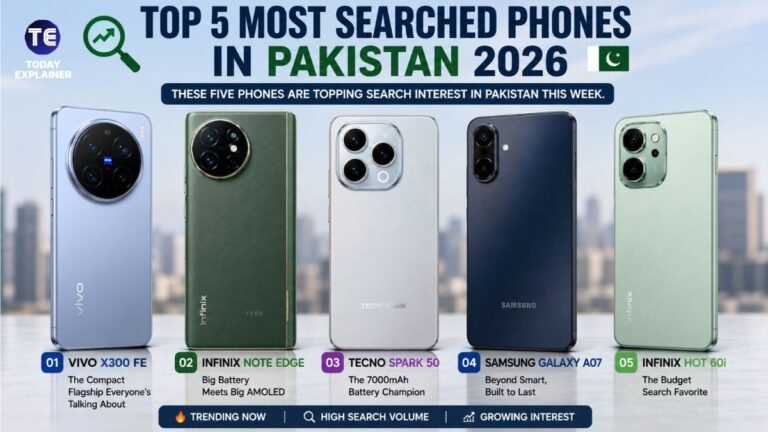
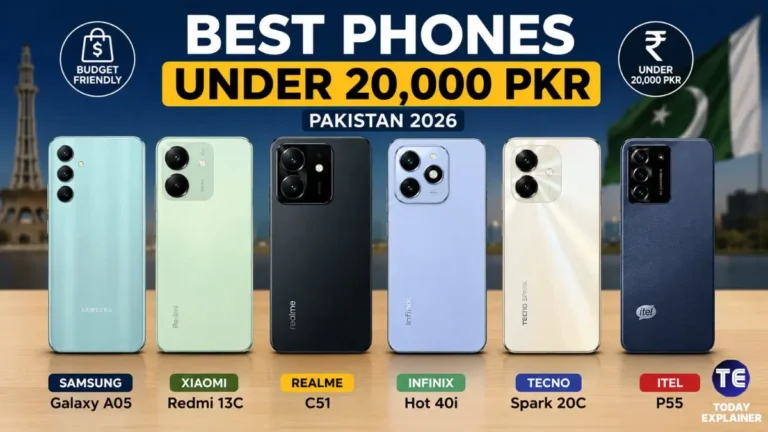
This guide compares five of the strongest options currently available under Rs. 30,000: the Infinix Hot 40i, Samsung Galaxy A06, Xiaomi Redmi 14C, Tecno Spark 30C, and itel S25. We’ll walk through what each one gets right, where it falls short, and which type of buyer it actually suits — plus common myths, buying tips, and answers to the questions people ask most.
Quick Answer: For most buyers, the Infinix Hot 40i (around PKR 29,599) offers the best all-round balance of battery life, a smooth 90Hz display, and 8GB RAM at this price. If you want a bigger screen for video and a huge battery instead, the Redmi 14C is the stronger pick.
Background / Context
The under-30,000 segment in Pakistan has shifted noticeably over the past year. Locally assembled devices from Infinix, Tecno, and Samsung avoid some of the import duties that apply to fully imported phones, which has let manufacturers put bigger batteries, faster charging, and sharper cameras into this bracket without raising prices as much as before.
At the same time, currency fluctuations and periodic changes to import and PTA tax structures continue to nudge prices up and down every few months, so a phone that cost Rs. 27,000 in one quarter can move a few thousand rupees either way in the next. As of 2026, virtually every phone in this bracket runs on 4G LTE only — PTA-approved 5G handsets in Pakistan still start at well above Rs. 40,000, mainly because of the way import taxes are structured for 5G-capable chipsets.
What’s genuinely new this year is the spread of 90Hz and 120Hz displays, 5000mAh+ batteries, and 50MP primary cameras becoming close to standard even at the lower end of this range — features that were reserved for phones twice this price only a couple of generations ago.
Key Specs & Terms Explained
Before comparing phones, it helps to know what these terms actually mean for everyday use — not just on a spec sheet.
- Refresh Rate (Hz): How many times per second the screen redraws. A 90Hz or 120Hz display makes scrolling and animations feel noticeably smoother than the older standard 60Hz, especially when browsing social media.
- Chipset (SoC): The processor that determines how fast the phone runs apps, games, and multitasking. Common budget chipsets here include the MediaTek Helio G81/G85/G88 series, Unisoc T606/T620, and similar entry-level octa-core processors.
- RAM: Short-term memory used to keep apps running smoothly. 4GB is the bare minimum for comfortable use in 2026; 6GB or 8GB avoids most slowdowns when switching between apps.
- OIS (Optical Image Stabilization): A hardware feature that physically stabilizes the camera lens to reduce blur — rare at this price point, so don’t expect it here.
- mAh (Battery Capacity): The energy capacity of the battery. 5000mAh is now the norm in this bracket and typically lasts a full day of moderate use.
- Fast Charging (W): How quickly the battery charges. Most phones here support 15W–18W charging; a few now push 33W, cutting charge time meaningfully.
- PTA Approval: Confirmation that a phone’s IMEI is registered with Pakistan’s Pakistan Telecommunication Authority, required for the SIM to work normally long-term. Always confirm this before buying, especially from resellers.
- AMOLED vs. IPS LCD: AMOLED panels offer deeper blacks and better contrast; IPS LCD is more common at this price and still perfectly usable, just less punchy in colour.
| Term | Simple Definition | Why It Matters for Buyers |
|---|---|---|
| Refresh Rate | Screen redraw speed (Hz) | Smoother scrolling and animations |
| Chipset | The phone’s processor | Determines speed and gaming ability |
| RAM | Short-term app memory | Affects multitasking without lag |
| OIS | Lens stabilization hardware | Reduces blur in photos/video (rare here) |
| Battery (mAh) | Energy capacity | Determines how long the phone lasts per charge |
| Fast Charging (W) | Charging speed | Less time spent waiting to charge |
| PTA Approval | IMEI registered locally | SIM keeps working without restrictions |
| AMOLED | Display panel type | Deeper blacks, better contrast than LCD |
Comparison Table (All Phones Side-by-Side)
Prices last checked August 2026 and may vary by retailer and city.
| Phone | Price (PKR) | Display | Chipset | RAM/Storage | Camera | Battery |
|---|---|---|---|---|---|---|
| Infinix Hot 40i | 29,599 | 6.56″ IPS LCD, 90Hz | Unisoc T606 | 8GB/128GB | 50MP rear, 32MP front | 5000mAh, 18W |
| Samsung Galaxy A06 | 26,999 (4/64GB) | 6.7″ PLS LCD, 90Hz | MediaTek Helio G85 | 4GB/64GB | 50MP+2MP rear, 8MP front | 5000mAh, 25W |
| Xiaomi Redmi 14C | 26,999 | 6.88″ IPS LCD, 120Hz | MediaTek Helio G81 Ultra | 4GB/128GB | 50MP+2MP rear, 13MP front | 5160mAh, 18W |
| Tecno Spark 30C | 28,999 | 6.67″ IPS LCD, 90Hz | MediaTek Helio (entry octa-core) | 6GB/128GB | 50MP rear, front camera | 5000mAh, 18W |
| itel S25 | 29,999 | 6.78″ AMOLED, 120Hz | Unisoc T620 | 6GB/128GB | 50MP rear, 32MP front | 5000mAh, 18W |
Individual Breakdown
Infinix Hot 40i — The All-Round Value Pick
- Price in Pakistan: PKR 29,599 (prices vary by retailer/city and change frequently)
- Key Specs:
- 6.56″ IPS LCD, 90Hz refresh rate
- Unisoc T606 chipset, 8GB RAM, 128GB storage
- 50MP main camera, 32MP front camera
- 5000mAh battery, 18W fast charging
- What Stands Out: For its price, the Hot 40i offers unusually generous RAM (8GB) alongside a smooth 90Hz panel — a combination most rivals in this bracket don’t match. It handles everyday multitasking, social apps, and casual gaming without noticeable stutter.
- Where It Falls Short: The 720p HD+ resolution on a 6.56-inch screen means text and video aren’t as crisp as on higher-resolution rivals, and the Unisoc T606 isn’t built for demanding games.
- Best For: Students and everyday users who want a smooth-feeling interface and don’t need flagship gaming performance.
- Pros:
- 8GB RAM at this price is rare
- Smooth 90Hz display
- Large 5000mAh battery
- Cons:
- Lower HD+ screen resolution
- Unisoc chipset lags behind MediaTek Helio G-series in gaming benchmarks
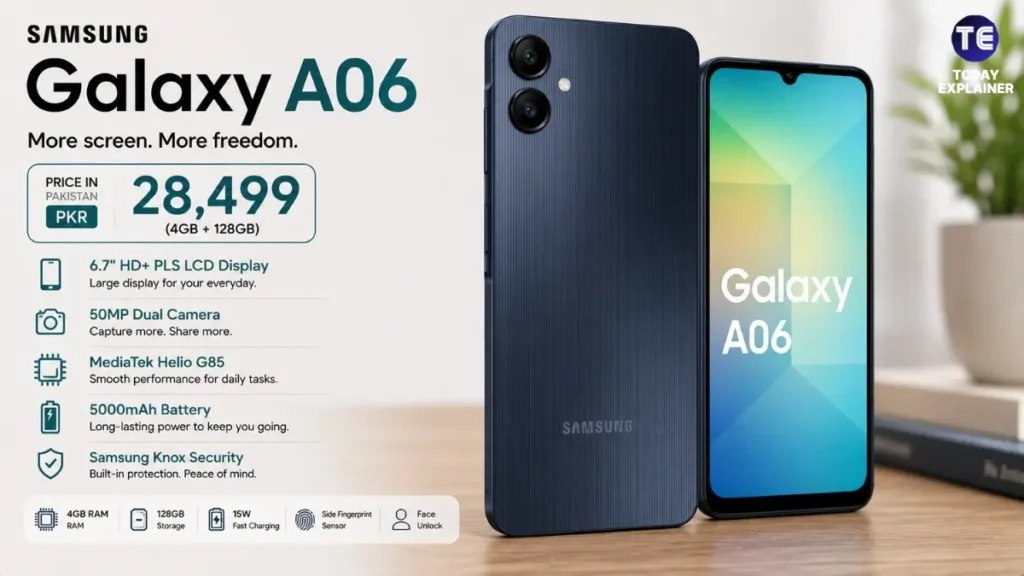
Samsung Galaxy A06 — Best for Brand Trust and Support
- Price in Pakistan: PKR 26,999 for the 4GB/64GB variant (128GB variants run higher, around PKR 32,000–33,000)
- Key Specs:
- 6.7″ PLS LCD, 90Hz refresh rate
- MediaTek Helio G85 chipset, 4GB RAM, 64GB storage
- 50MP+2MP rear camera, 8MP front camera
- 5000mAh battery, 25W fast charging
- Side-mounted fingerprint sensor, Samsung Knox security
- What Stands Out: Samsung’s after-sales service network is the widest in Pakistan, which matters a lot once you’re outside major cities and need a repair or warranty claim. The 25W charging is also faster than most competitors here.
- Where It Falls Short: The base variant’s 64GB storage and 4GB RAM fill up quickly with everyday photo and app usage — the 128GB/6GB variant is worth the extra cost if you can stretch the budget slightly.
- Best For: Buyers who prioritize service network reliability and long-term software updates over raw specs.
- Pros:
- Strong nationwide service network
- Fast 25W charging
- Reliable One UI software with security features
- Cons:
- Base storage (64GB) is tight for heavy users
- Only 4GB RAM on the entry variant
Xiaomi Redmi 14C — Best for Media and Screen Size
- Price in Pakistan: PKR 26,999 (4GB/128GB); 6GB variant runs closer to PKR 29,999–32,000
- Key Specs:
- 6.88″ IPS LCD, 120Hz refresh rate
- MediaTek Helio G81 Ultra chipset, 4GB–6GB RAM, 128GB storage
- 50MP+2MP rear camera, 13MP front camera
- 5160mAh battery, 18W fast charging
- What Stands Out: The 6.88-inch screen is the largest in this comparison, and the 120Hz refresh rate is a genuine step up for scrolling and casual gaming. Battery life is also a strength thanks to the 5160mAh cell — easily a day and a half for moderate users.
- Where It Falls Short: The display resolution stays at 720p despite the large size, so text can look slightly soft, and 18W charging is on the slower side for a phone with this much battery capacity.
- Best For: Buyers who spend a lot of time watching video, browsing, or reading and want the biggest, smoothest screen in this price range.
- Pros:
- Biggest display in the comparison
- 120Hz refresh rate at a budget price
- Excellent battery longevity
- Cons:
- HD+ (720p) resolution on a large panel
- Slower 18W charging relative to battery size
Tecno Spark 30C — Best for Everyday Design and Balance
- Price in Pakistan: PKR 28,999 (prices vary by retailer/city and change frequently)
- Key Specs:
- 6.67″ IPS LCD, 90Hz refresh rate
- Entry-level octa-core MediaTek chipset, 6GB RAM, 128GB storage
- 50MP main rear camera
- 5000mAh battery, 18W fast charging
- What Stands Out: Tecno’s Spark series consistently packs a modern, slim design and 6GB RAM into this bracket, which keeps day-to-day multitasking comfortable without feeling like a compromise device.
- Where It Falls Short: Camera performance drops off noticeably in low light, and there’s no 5G or higher-tier chipset to grow into if your needs increase.
- Best For: Buyers who want a phone that looks and feels more premium than its price suggests, for daily use rather than gaming or photography.
- Pros:
- 6GB RAM as standard
- Modern, slim design
- Reliable 5000mAh battery
- Cons:
- Weak low-light camera performance
- No 5G, limiting long-term upgrade headroom
itel S25 — Best Display Quality for the Price
- Price in Pakistan: PKR 29,999 (6GB/128GB variant; pricing has ranged from roughly PKR 28,300 to PKR 33,500 across retailers)
- Key Specs:
- 6.78″ AMOLED display, 120Hz refresh rate
- Unisoc T620 chipset, 6GB RAM, 128GB storage
- 50MP main rear camera, 32MP front camera
- 5000mAh battery, 18W fast charging
- Under-display fingerprint sensor
- What Stands Out: This is one of the very few phones under Rs. 30,000 with an AMOLED panel, which means genuinely deep blacks and vibrant colours you normally only see at higher price points — a real differentiator for streaming and social media.
- Where It Falls Short: itel’s brand recognition and resale value in Pakistan lag behind Samsung, Xiaomi, and Infinix, and its after-sales service network is smaller.
- Best For: Buyers who want the best possible screen quality at this budget and don’t mind a less well-known brand name.
- Pros:
- Rare AMOLED display at this price
- 120Hz refresh rate
- Under-display fingerprint sensor
- Cons:
- Smaller service network than major brands
- Lower resale value
Why This Matters (Buyer Decision Factors)
Performance vs. Battery Life
At this price, you rarely get both a fast chipset and a huge battery — most phones lean toward one. The Infinix Hot 40i and Tecno Spark 30C lean toward smoother day-to-day performance with generous RAM, while the Redmi 14C leans hard into battery longevity with its 5160mAh cell.
Display Quality vs. Resolution
The itel S25’s AMOLED panel wins on colour and contrast, but its resolution is comparable to the IPS LCD competitors. If you mainly watch video or read, screen size (Redmi 14C) may matter more to you than panel type.
Camera Realism
None of these phones will match a mid-range phone’s camera in low light — that’s simply not realistic at this budget. Daylight photos are genuinely good across the board; night shots are where compromises show up on every single model here.
Brand Support and Resale Value
Samsung and Xiaomi generally hold resale value and service network reach better than itel or newer sub-brands, which matters if you plan to sell or upgrade within two years.
Buying Tip: If you’re torn between two phones with similar specs, check which brand has an authorized service center in your city first — a warranty is only as useful as your ability to actually use it.
What to Expect Next (Category Trends)
- More 120Hz displays at lower prices: What was a mid-range feature two years ago is now becoming close to standard even under Rs. 30,000, and this trend is likely to continue through 2026.
- Gradual storage upgrades: 128GB is becoming the effective baseline in this segment, with 64GB variants increasingly positioned as the budget-conscious fallback rather than the default.
- Continued price movement tied to currency and import policy: Expect prices in this bracket to shift by a few thousand rupees over the coming months as exchange rates and import duty structures change — buying in a sale window can meaningfully affect what you pay.
Common Misconceptions
Myth: A higher RAM number always means better real-world performance. Reality: RAM helps with multitasking, but the chipset (SoC) does most of the heavy lifting for speed. An 8GB RAM phone with a weaker chipset can still feel slower than a 6GB phone with a stronger one.
Myth: Grey market (non-PTA) phones are just as safe to buy as PTA-approved ones. Reality: Non-PTA phones can lose full mobile network functionality after a set period unless registered and taxed through PTA’s DIRBS system, which can cost more in the end than buying PTA-approved from the start.
Myth: More megapixels always means a better camera. Reality: Sensor size, software processing, and lens quality affect photo quality as much as the megapixel count. A well-tuned 50MP camera can outperform a poorly optimized 108MP one.
Myth: All phones under 30,000 support 5G. Reality: As of 2026, essentially no phone under Rs. 30,000 in Pakistan supports 5G — that capability currently starts appearing meaningfully above Rs. 40,000–45,000 due to import taxation on 5G chipsets.
Myth: A bigger battery number (mAh) always means longer battery life. Reality: Battery life also depends on the chipset’s power efficiency and the display’s refresh rate and resolution — a 5000mAh battery paired with an efficient chipset can outlast a larger battery paired with a power-hungry one.
Myth: You should always buy the newest model, even if it costs more. Reality: Previous-generation models often get discounted once a successor launches, and the actual real-world difference between consecutive generations at this price point is often small.
Myth: Local assembly means lower quality than fully imported phones. Reality: Locally assembled units from major brands follow the same manufacturing specifications as imported ones — the main difference is the tax structure that makes them more affordable, not the build quality.
Recent Developments (Last 6–12 Months)
- Early 2026: AMOLED displays began appearing more frequently under Rs. 30,000, with the itel S25 among the first widely available options at this price.
- Mid-2026: Several brands, including Infinix and Xiaomi, adjusted retail pricing on existing models by a few thousand rupees in response to currency fluctuations, with the Redmi 14C’s pricing moving between roughly PKR 26,999 and PKR 32,000 depending on the retailer and RAM variant.
- Mid-2026: Samsung’s Galaxy A06 saw its 128GB variant become more widely available and better priced relative to the 64GB base model, narrowing the gap for buyers who want more storage.
- 2026 ongoing: PTA-approved 5G phones have remained largely out of reach under Rs. 40,000–45,000, keeping this entire bracket firmly 4G-only for now.
- 2026 ongoing: Local retailers including PriceOye and WhatMobile continue to show daily price fluctuations of a few hundred to a few thousand rupees across all major sub-30K models, reinforcing the importance of checking prices close to your actual purchase date.
Real Buyer Scenarios
The following are illustrative buyer scenarios, not real testimonials, meant to help you match a phone to your own situation.
Scenario 1: The university student. A student needs a reliable phone for online classes, note-taking apps, and moderate social media use, with a battery that survives a full day on campus without a charger. The Infinix Hot 40i fits well here — 8GB RAM keeps multiple apps running smoothly, and the 5000mAh battery comfortably covers a full day.
Scenario 2: The small business owner. Someone running a shop or small delivery business needs a dependable phone for calls, WhatsApp, and basic accounting apps, with strong local service support in case something goes wrong. The Samsung Galaxy A06 suits this best, thanks to Samsung’s wide service network across Pakistani cities.
Scenario 3: The content-watcher. A buyer who spends most of their phone time on YouTube, TikTok, and video calls wants the biggest, smoothest screen possible without spending more. The Redmi 14C‘s 6.88-inch 120Hz display and long-lasting 5160mAh battery are built for exactly this kind of use.
Buying Tips for This Price Range
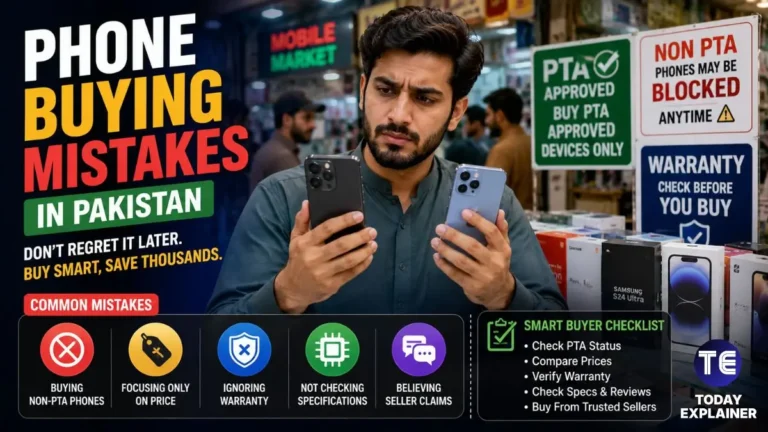
- Always confirm PTA approval before purchasing — check the IMEI on PTA’s official DIRBS portal, especially when buying from resellers or open markets.
- Buy from authorized retailers or official brand stores where possible, since warranty claims are far easier to process than through informal resellers.
- Check the exact RAM/storage variant, not just the phone model name — the same phone name often has multiple configurations at different prices.
- Compare prices across at least two platforms (e.g., PriceOye and WhatMobile) before buying, since prices can differ by a few thousand rupees between sellers.
- Factor in accessory costs, especially for brands like Samsung that no longer include a charger in the box — budget an extra PKR 3,000–4,000 if needed.
- Avoid used or “open box” units advertised as new unless the seller can show original packaging and a valid warranty card.
- Don’t assume the highest-numbered model is newest or best — check the actual release date and specs sheet rather than relying on the model name alone.
Conclusion and Final Verdict
- Best Overall: Infinix Hot 40i — the strongest balance of RAM, display smoothness, and battery life for most everyday users.
- Best for Brand Trust/Service: Samsung Galaxy A06 — unmatched service network reach in Pakistan.
- Best for Screen/Media: Xiaomi Redmi 14C — the largest, smoothest display and longest battery life.
- Best Display Quality: itel S25 — the only AMOLED panel in this price bracket.
- Best Everyday Design: Tecno Spark 30C — a modern feel with solid RAM for daily use.
The Bottom Line: There’s no single “best” phone under Rs. 30,000 in Pakistan — there’s a best phone for what you actually do with it. If you want an all-rounder, the Infinix Hot 40i is hard to beat right now. If screen size and battery matter more than raw speed, the Redmi 14C pulls ahead. And if brand support and resale value matter most to you, the Samsung Galaxy A06 remains the safer long-term bet — even though it asks you to compromise slightly on storage and RAM at the base price.
FAQs
Q: Which phone is the best overall under 30,000 in Pakistan right now? A: The Infinix Hot 40i currently offers the best all-round balance of RAM, display smoothness, and battery life at this price, though the right choice depends on your specific priorities.
Q: Can I get a 120Hz display phone under 30,000 PKR? A: Yes — both the Xiaomi Redmi 14C and itel S25 offer 120Hz refresh rate displays within this budget.
Q: Are any phones under 30,000 in Pakistan PTA approved? A: Yes, all the phones in this guide are available in PTA-approved variants through official retailers, but always verify the specific unit’s IMEI before buying.
Q: Do phones under 30,000 support 5G in Pakistan? A: No, not currently — officially PTA-approved 5G smartphones in Pakistan start above roughly Rs. 40,000–45,000 due to current taxation and import structures.

Q: Which phone under 30,000 has the best camera? A: The Infinix Hot 40i, Samsung Galaxy A06, and Redmi 14C all use a 50MP primary sensor with broadly similar daylight performance; none excel in low light at this price.
Q: Is 4GB RAM enough for a phone in 2026? A: 4GB is workable for light use like calls, messaging, and browsing, but 6GB or 8GB is a noticeably smoother experience for multitasking and modern apps.
Q: Which phone under 30,000 has the best battery life? A: The Redmi 14C’s 5160mAh battery gives it a slight edge, though the 5000mAh batteries in the other four phones are all close behind for typical daily use.
Q: Should I choose 64GB or 128GB storage? A: 128GB is the more practical choice for most buyers in 2026, since photos, apps, and app updates fill 64GB relatively quickly.
Q: Is it better to buy from PriceOye, WhatMobile, or a local shop? A: All three are viable — compare prices across platforms first, and prioritize whichever offers the clearest warranty terms and easiest return policy for your city.
Q: Can these phones handle PUBG Mobile or Free Fire? A: Yes, on Low or Smooth graphics settings — the chipsets in this bracket aren’t built for higher settings without noticeable stutter.
Q: Why do prices for the same phone vary between websites? A: Retailers set their own margins and run periodic discounts, and prices are also affected by exchange rate movements, so it’s normal to see differences of a few thousand rupees.
Q: Does the itel S25’s AMOLED display make it the best pick overall? A: It makes it the best pick for screen quality specifically, but itel’s smaller service network and lower resale value are worth weighing against that advantage.
Q: Do these phones come with a warranty in Pakistan? A: Yes, all five typically ship with a one-year official brand warranty when purchased through authorized retailers — always ask for and keep the warranty card.

Q: Which phone is best for a first-time smartphone user? A: The Samsung Galaxy A06 is a strong starting point thanks to Samsung’s familiar, well-supported software and simple interface.
Q: Will these phones get software updates? A: Update support varies by brand and typically lasts one to two major Android version upgrades at this price tier; Samsung generally offers the most consistent long-term support among these five.
Q: Is it worth waiting for prices to drop further? A: Prices in this segment fluctuate by a few thousand rupees over time rather than dropping steadily, so waiting indefinitely isn’t usually worth it — watching for a seasonal sale is more effective.
Where to Verify Prices & Specs
- GSMArena — for detailed, brand-neutral technical specifications
- WhatMobile.com.pk — for daily-updated Pakistani retail pricing
- PriceOye — for current online pricing and seller comparisons
- Official brand websites (Samsung, Xiaomi, Infinix, Tecno, itel) — for the most accurate specification sheets and official warranty terms
Discussion
What matters most to you in a phone under Rs. 30,000 — battery life, camera quality, or a smooth display? Have you used any of these five phones, and did it hold up the way the specs suggested? If your budget shifts by a few thousand rupees in either direction, which trade-off would you be willing to make?